
Brent encourages owners to get a certificate even when no planning permission is needed. Before we draw one, we rule out the three things that would make it the wrong application: a flat, a conservation area and an HMO change.
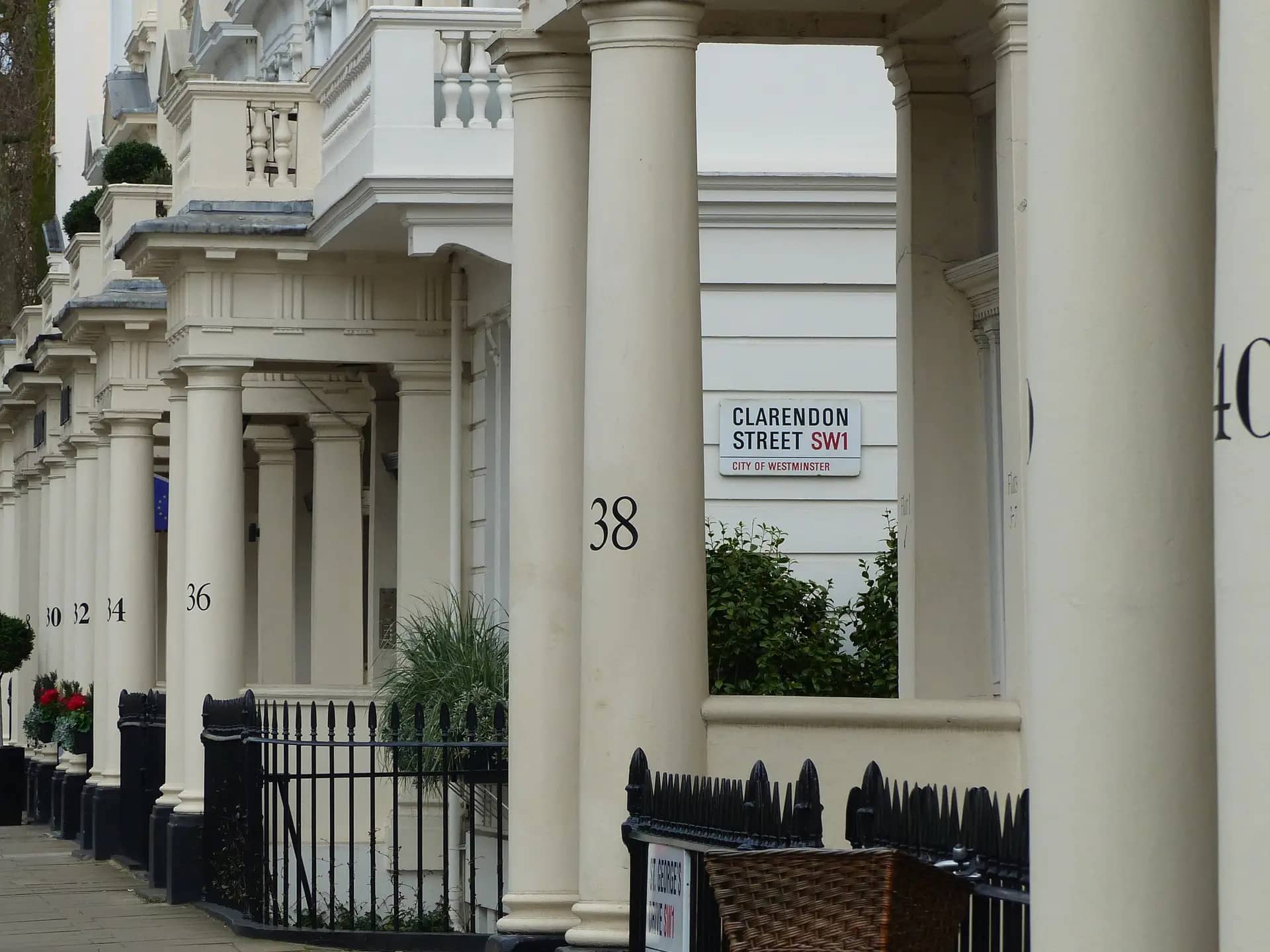
Photo: Ruth Sharville, BY-SA 2.0
Brent's guide to application types lists the lawful development certificate as optional but strongly recommended if you are carrying out work under permitted development. It gives the reason in plain words: it provides formal proof that your work did not need planning permission, which is useful if you sell your home or need to show evidence later. The council's own examples are single-storey extensions, loft conversions and outbuildings.
The same council page that explains permitted development says it still encourages you to apply for a certificate if you do not need planning permission, calling it your proof that the building work is lawful. A buyer's solicitor in Wembley or Kenton will ask for exactly that document when a loft or kitchen extension appears on the plans with no planning history behind it.
A certificate for proposed work is decided against the rules as they stand, so the drawings must show the measurements that matter: the cubic volume of a dormer, the depth and height of an extension, and its distance from the boundary. We take those on site, and we work the roof volume out on the drawing so the case officer can check it line by line.

Three checks decide whether a Brent project can be certified at all.
| Situation | Certificate possible? | Why |
|---|---|---|
| House outside a conservation area | Yes, if within the GPDO limits | Brent types of application page |
| Flat, maisonette or sub-divided house | No | No householder permitted development rights |
| Residential conservation area | Often not | All are covered by Article 4 directions |
| House to small HMO (C3 to C4) | No | Article 4 in effect since 1 November 2022 |
Brent Council planning pages read 25 October 2026; GPDO 2015 Schedule 2 Part 1.
The fee includes our measured visit. The bracketed figure applies if you already have measured drawings.
Brent has 22 conservation areas and states that all of its residential conservation areas are covered by Article 4 directions. The controls listed include front windows and doors, painting the front of the house, paving the front garden, front walls, roof tiles, chimneys, and sheds and outbuildings in rear gardens. A certificate cannot confirm work that a direction has removed, so in Kilburn, Mapesbury or Barn Hill the answer is usually a householder application instead.
The second direction to know is borough-wide. Brent confirmed an Article 4 direction on 3 February 2022 requiring planning permission to change a family house (Use Class C3) into a small house in multiple occupation (C4), in effect from 1 November 2022. A landlord who wants a certificate for that change will not get one, whatever the size of the house.
For example, a semi in Neasden outside any conservation area with a rear dormer of 46 cubic metres sits within the 50 cubic metre Class B allowance and is a good candidate for a certificate. The same dormer on a Queen's Park terrace is not. Brent decided 660 householder applications in the year to June 2026, prior approvals aside, and 643 within 8 weeks.
Every figure is linked to the page or document we read.
Brent says a lawful development certificate is optional but strongly recommended for permitted development work, with a typical decision time of around 8 weeks.
Source: Brent Council, Types of planning applicationsBrent says permitted development rights do not apply to a flat, maisonette or listed building, that there are fewer rights in conservation areas, and lists 9 kinds of work that normally need planning permission.
Source: Brent Council, Do you need planning permissionBrent confirmed an Article 4 direction for change of use from C3 dwellings to C4 small HMOs on 3 February 2022, in effect from 1 November 2022.
Source: Brent Council, Article 4 directionsBrent has 22 conservation areas, and all of its residential conservation areas are covered by Article 4 directions.
Source: Brent Council, Listed buildings and conservation areasBrent decided 660 householder applications between July 2025 and June 2026, prior approvals excluded, and 643 of them were decided within 8 weeks.
Source: MHCLG, Planning application statistics PS2, July 2025 to June 2026Class B permits a roof extension of up to 40 cubic metres on a terraced house and 50 cubic metres in any other case.
Source: legislation.gov.uk, GPDO 2015, Schedule 2, Part 1, Class BTell us about your project and get a fixed, no-obligation quote back within one working day. If you don't need planning permission at all, we'll tell you that too — for free.
No, it is optional, but Brent says it is strongly recommended for work done under permitted development. It is formal proof that planning permission was not needed, which a buyer's solicitor or a lender will often ask to see later.
Brent's guide to application types gives a typical decision time of around 8 weeks for a lawful development certificate. We submit a complete set of measured drawings so the clock is not stopped by a request for more information.
Usually not. Brent says all of its residential conservation areas are covered by Article 4 directions, and Class B roof extensions are not permitted development on houses in conservation areas, so a householder application is the normal route there.
No. Since 1 November 2022 an Article 4 direction confirmed on 3 February 2022 requires planning permission anywhere in its area for a change from a family house to a small house in multiple occupation, so a certificate cannot be granted.
£715 inc survey (£515 if you supply measured drawings). That covers the measured survey, the drawings and the application. Brent's own fee is separate and goes to the council.
Answer five quick questions and get a free planning score for your exact address — instantly. Then, if you want the full picture, unlock the detailed analysis: your council's live approval rates, local precedents, constraints on your street and a step-by-step route to permission.
Same fixed quotes, same fast drawings — wherever your project is.