
A tree near your extension can stop a planning application being validated. A partner arboriculturist surveys it, records its size and condition, and gives the council the evidence it asks for.
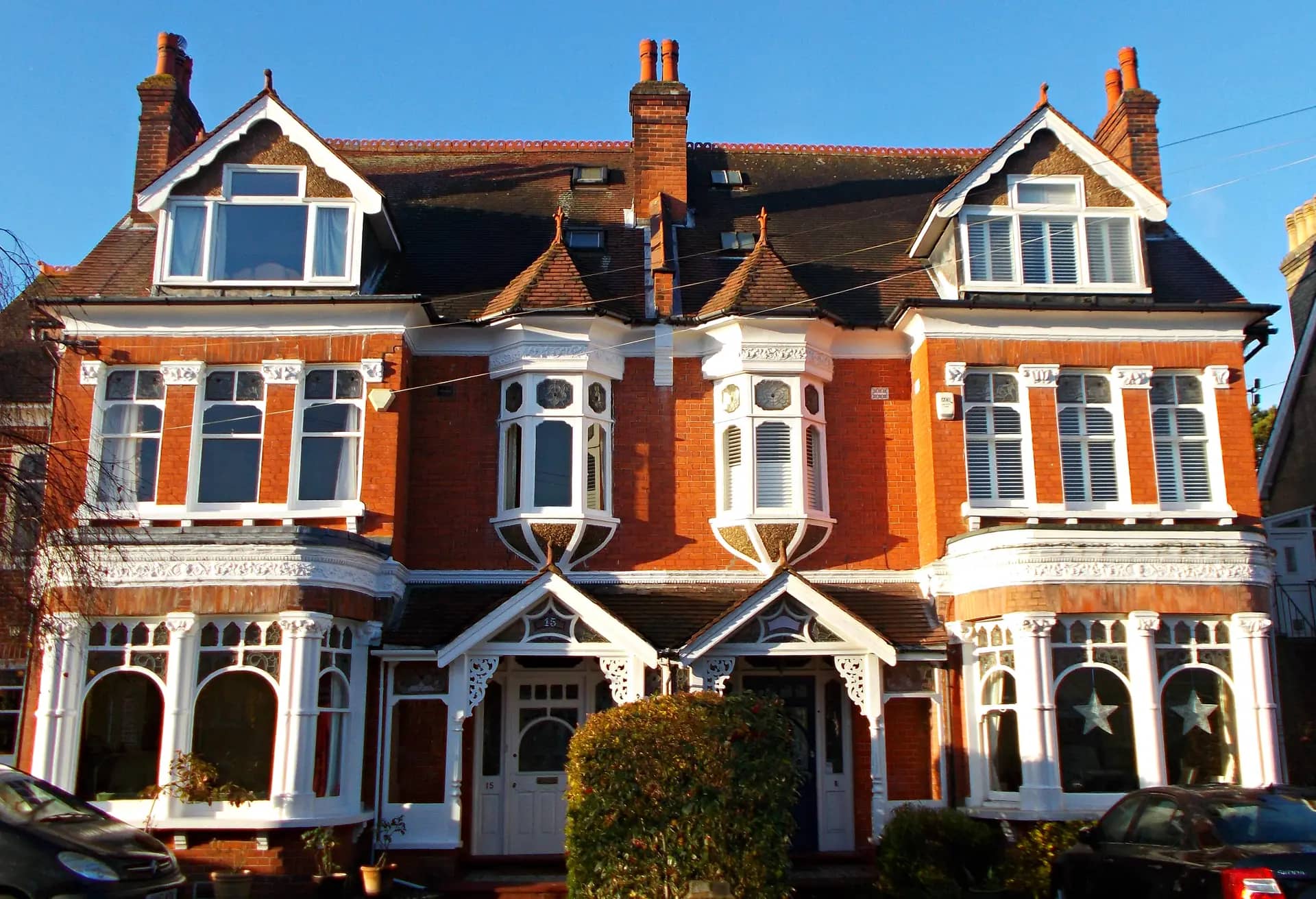
Photo: A P Monblat, BY-SA 4.0
Tree survey, impact assessment, where needed, is quoted on top
Fixed in writing after a free assessment of your property. Council planning fees are separate.
Every price is the total you pay. Checked 24 October 2026.
Trees are a common reason for a planning application to be held back. A tree in your garden, or in the neighbour's within a few metres of the new footing, can be protected by a Tree Preservation Order. A tree in a conservation area is protected by that designation, even with no order, and s.211 of the 1990 Act requires 6 weeks' notice before work. In both cases work on the tree needs the council's say-so, and a foundation near the roots can count as work.
The council asks for a survey so that it can see which trees exist, how healthy they are, how large their root zone is and how the design affects them. Without it, the planning officer cannot weigh the harm, and the usual outcome is a request for more information, or a validation refusal.
A survey by a qualified arboriculturist gives each tree a category, marks its root protection area on a plan, and flags which trees should stay and which could go. If the design clashes with a root zone, the findings often lead to a small design change, such as moving a footing or choosing a pile foundation, and that is cheaper than losing the tree argument at committee.
If none of the trees is affected, the survey says so, and the application moves on with that evidence on file.
A report and a plan, supplied alongside your drawings.
The protection depends on where the tree stands, and the notice period depends on the protection.
| Tree location | Protection | What you do before works |
|---|---|---|
| Tree with a TPO | Tree preservation order | Apply for consent; wait for a decision |
| Tree in a conservation area, no TPO | Conservation area rules | Give 6 weeks' notice to the council |
| Neighbour's tree near your foundations | Often TPO or conservation area | Survey the root zone; avoid damage |
| Tree in a garden with no designation | None, unless a condition applies | Check the planning history |
Each figure links to the law or government source it comes from.
In a conservation area, you must give the council 6 weeks' notice before certain work on a tree that has no tree preservation order, using a section 211 notice.
Source: GOV.UK, Tree preservation orders and trees in conservation areas, paragraph 116Section 211(3) gives a defence to work on a conservation-area tree if notice was served and 6 weeks have passed, or the council consented.
Source: legislation.gov.uk, Town and Country Planning Act 1990, s.211If a council has not decided a tree preservation order application within 8 weeks of receiving it, the applicant may appeal on grounds of non-determination.
Source: GOV.UK, Tree preservation orders and trees in conservation areas, paragraph 101Consent granted under a tree preservation order is valid for 2 years from the date of grant, and the works may be carried out only once unless a condition says otherwise.
Source: legislation.gov.uk, Tree Preservation (England) Regulations 2012, regulation 17(4)Under paragraph 120, unauthorised work on an unprotected tree in a conservation area carries the same penalties as contravening a tree preservation order.
Source: GOV.UK, Tree preservation orders and trees in conservation areas, paragraph 120A council has 8 weeks to decide most planning applications from the day after a valid application is received.
Source: legislation.gov.uk, Development Management Procedure Order 2015, article 34Tell us about your project and get a fixed, no-obligation quote back within one working day. If you don't need planning permission at all, we'll tell you that too — for free.
Ask your council, or search its tree preservation order map. Trees in a conservation area are protected even without an order. Do not prune or fell before you know, because unauthorised work is an offence.
The survey records the trees and their condition. An impact assessment goes further and says how your design affects each one, with protection measures. Many householder schemes need the survey only. If the council asks for the assessment, we quote it on top before you commit.
Only with the council's agreement where the tree is protected. A good survey may show that the tree can stay with a change to the foundation design, which is often better than seeking consent for removal.
Yes, if its roots or canopy could be affected. The root zone does not stop at the boundary, so the survey includes neighbouring trees within reach of the work.
Consent under a tree preservation order lasts 2 years from the date of the grant, and the works can be carried out once. Plan the work inside that period.
The £485 covers a survey of the trees close to a typical householder scheme by a partner arboriculturist, added to your planning job. Sites with many trees, or woodland, are quoted after a look at the plans.
Answer five quick questions and get a free planning score for your exact address — instantly. Then, if you want the full picture, unlock the detailed analysis: your council's live approval rates, local precedents, constraints on your street and a step-by-step route to permission.