
Your council flagged your extension as being in a flood zone and asked for a flood risk assessment. We write one to the Environment Agency's standing advice, with floor levels, flood resilience and the evidence your officer needs.
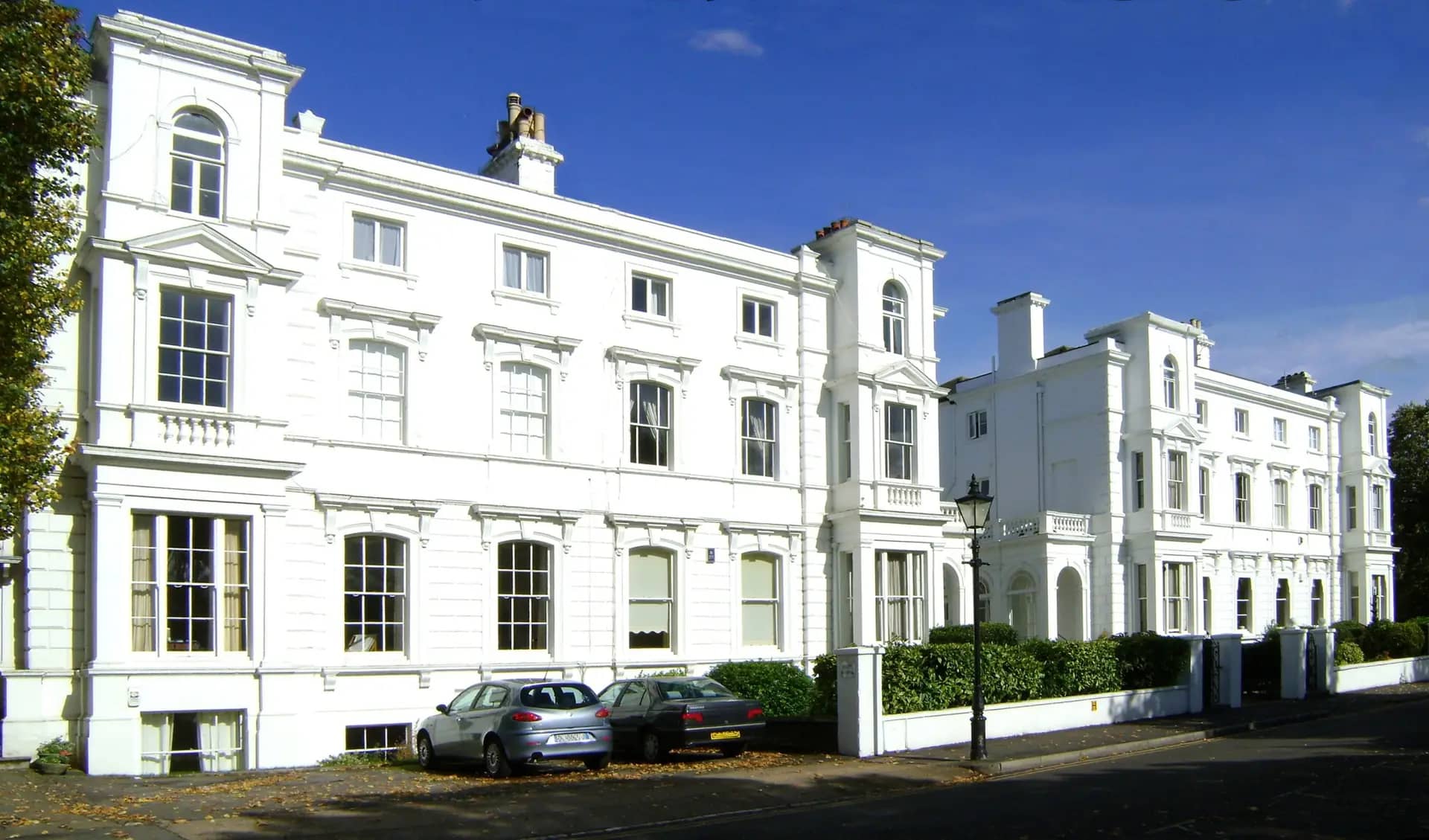
Photo: Maxwell Hamilton, BY 2.0
Flood risk assessment (householder)
Fixed in writing after a free assessment of your property. Council planning fees are separate.
Every price is the total you pay. Checked 24 October 2026.
Flood zones come from the Environment Agency's flood map for planning. Parts of many London boroughs along the Thames, the Lee, the Brent, the Wandle and their tributaries sit in Flood Zone 2 or 3, and surface water flooding is a separate matter in built-up streets. If your plot is in a zone, a minor extension is not refused on that ground alone, but the council needs proof that you have thought about it.
For a householder extension, the standing advice asks for a short, specific assessment. It sets the floor level against the estimated flood level, says what flood resilient materials and details you will use, explains how occupants escape, and shows that the extension will not displace floodwater onto the neighbours. For tidal flooding, the design flood is a 1 in 200 annual chance, and for rivers and surface water 1 in 100, each with a climate change allowance.
The assessment does not have to be long. A good one is a few pages, with a site plan, a level survey where one is needed, and a clear answer to each point the standing advice asks. A thin one, or one that ignores the surface water risk, is returned by the council.
If your site is in Flood Zone 3b, the functional floodplain, or the extension is larger than 250 square metres, the advice is different, and we tell you before you pay.
Four steps, using public flood data and your drawings.
The test applied depends on the zone and the size of the extension.
| Situation | What the council expects | Our step |
|---|---|---|
| Flood Zone 1, no other risk | No assessment normally | None |
| Flood Zone 2, minor extension | A short assessment following standing advice | Written assessment |
| Flood Zone 3a, minor extension | Assessment, with floor levels and resilience | Written assessment, with levels |
| Flood Zone 3b | Development is usually resisted | Advice before you spend |
| Within 20 m of a main river | Permit may be needed from the Environment Agency | Point you to the permit |
Source: GOV.UK flood risk standing advice.
Each figure links to the government source it comes from.
The standing advice defines a minor extension as a householder or non-domestic extension with a floor space of no more than 250 square metres.
Source: GOV.UK, Flood risk assessment: standing adviceFloor levels should be at least 600 millimetres above the estimated flood level, or 300 millimetres where the level is known with high certainty.
Source: GOV.UK, Flood risk assessment: standing adviceThe design flood is a 1 in 100 annual probability for rivers and surface water and 1 in 200 for tidal flooding, each including a climate change allowance.
Source: GOV.UK, Flood risk assessment: standing adviceA flood risk activity permit may be needed for work within 20 metres of a main river.
Source: GOV.UK, Flood risk assessment: standing advicePlanning permission is needed to surface more than 5 square metres of front garden with a non-porous material.
Source: GOV.UK, Flood risk assessment: standing adviceA council has 8 weeks to decide most applications from the day after a valid application is received, and a missing assessment can prevent validation.
Source: legislation.gov.uk, Development Management Procedure Order 2015, article 34Tell us about your project and get a fixed, no-obligation quote back within one working day. If you don't need planning permission at all, we'll tell you that too — for free.
Use the Environment Agency's flood map for planning with your postcode, or check the council's constraints map. Our planning constraints report includes the flood zone alongside conservation area, Article 4 and listing checks.
No. It is needed where the site is in Flood Zone 2 or 3, or where the council has flagged an increased risk from surface water or multiple minor extensions. In Flood Zone 1 with no other flag, a flood risk assessment is not normally required.
Often, yes, because floor levels are measured against flood level. If you have a survey from our measured visit, it can include levels. Otherwise a level survey can be added at extra cost, which we quote before you commit.
Yes, on other grounds, as with any application. A good assessment removes flood risk as a reason. It does not guarantee a decision.
The £415 covers a written assessment for a householder extension, drawn from public flood data and your drawings. Larger or non-householder schemes are quoted separately.
It addresses surface water as part of the assessment and suggests measures such as raised thresholds and permeable surfaces. No assessment can guarantee a house will never flood, and we do not say it will.
Answer five quick questions and get a free planning score for your exact address — instantly. Then, if you want the full picture, unlock the detailed analysis: your council's live approval rates, local precedents, constraints on your street and a step-by-step route to permission.