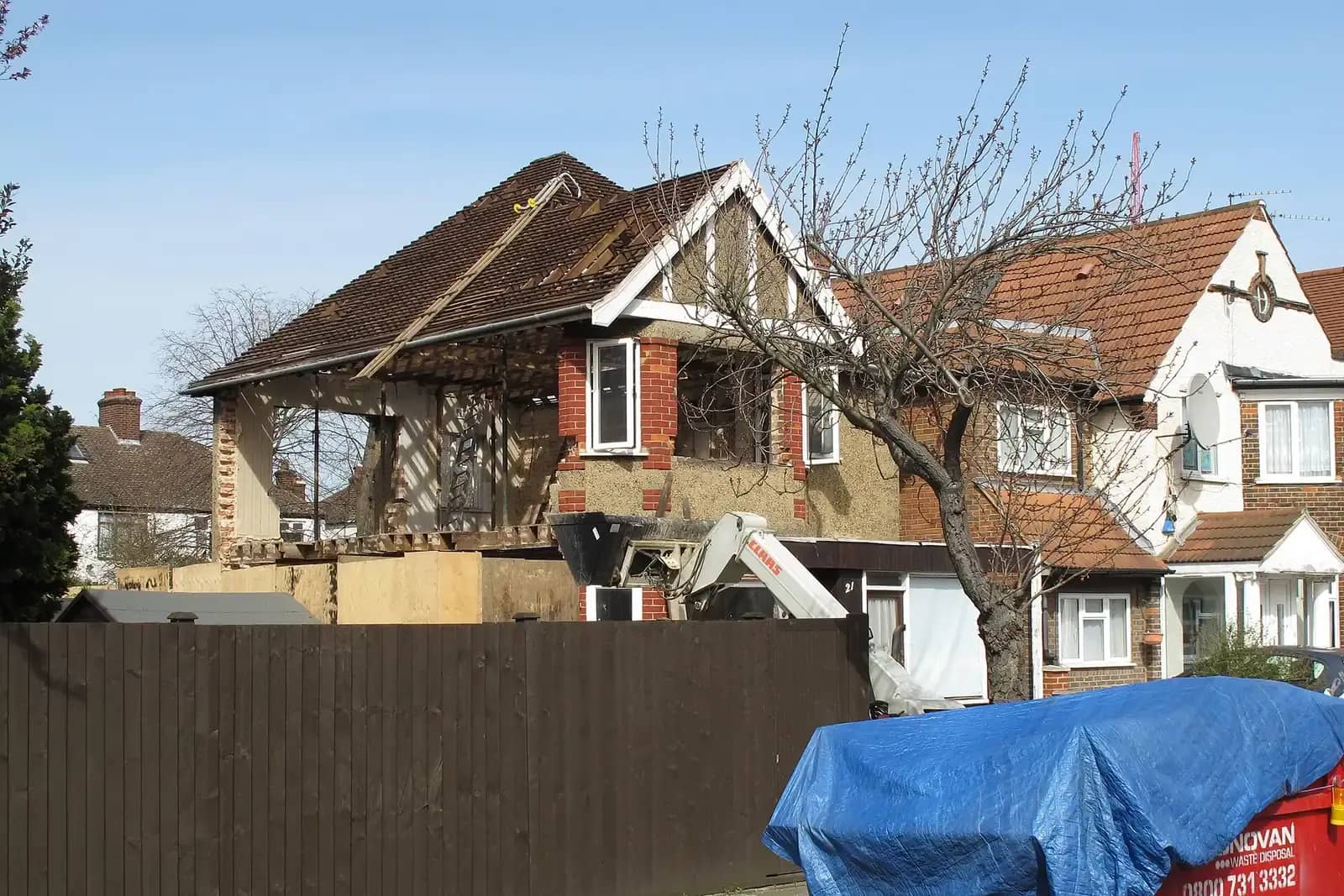
A retrospective planning application in London costs £765 inc survey with us, or £565 if you can supply measured drawings of what stands today. That covers the as-built survey, the drawings, the planning case that explains why the work is acceptable, and the submission.
The council charges its own fee as well. The real cost, though, is the risk. A council is not bound to say yes because the work exists, and if it says no you may have to alter or remove what you paid to build. This article sets out the costs, the time limits that apply and how to decide whether to apply.
What the fixed fee covers
Our £765 inc survey starts with a measured survey of the work as it stands, not as it was designed. That is the first difference from an ordinary application. The drawings have to match the building exactly, because the officer may check them against what they see on a site visit. We then add a planning case: a short written argument for why this development, in this street, should be allowed.
The case is the part people underestimate. A council deciding a normal application is looking at a proposal. A council deciding a retrospective one is looking at a fact on the ground, and it must still apply the same policies. Neighbour effect, design, materials and any loss of garden are judged as if the work had not been built.
The council fee for work already built
A retrospective application is listed in the fees guidance among the applications that attract a fee: the GOV.UK guidance names applications where development has already taken place. The amount follows the same table as any other application of that type, so a householder project costs the householder fee.
We do not print the figure, because fees rise each 1 April, and we quote it at the time you apply.
Can a council grant permission after the fact
Yes. Section 73A of the Town and Country Planning Act 1990 says that when a council decides an application, the permission it may grant includes permission for development carried out before the date of the application. The test is the one that would apply to a new proposal, so being already built is neither a reason to refuse nor a reason to grant.
Two points in the law affect timing. If the council has already served an enforcement notice before you apply, section 70C lets it decline to consider an application that would grant permission for the same matters. That is the main reason not to wait.
Time limits that decide how urgent this is
Under section 171B, a council in England has 10 years, from substantial completion, to take enforcement action against building work, and 10 years from the breach for a change of use to a single dwelling or any other breach of planning control. After that the work is immune from action.
That gives some owners a different route. If the work is old enough, a certificate of lawful existing use or development can prove it, and no planning case is needed. We need dates for that: building control records, dated photographs, or old estate agent particulars all help.
| Situation | Deadline | Where it comes from |
|---|---|---|
| Application refused (no enforcement notice) | 12 weeks to appeal | GOV.UK householder appeals |
| Enforcement notice served before refusal | 28 days to appeal | GOV.UK householder appeals |
| Enforcement notice served after refusal | 28 days from the notice, or 6 months from the decision, whichever is sooner | GOV.UK householder appeals |
| Council taking enforcement action | 10 years from completion for operational development | Section 171B |
Should you apply, appeal or leave it
That depends on three questions. First, was the work lawful all along under permitted development? Second, is it old enough to be immune? Third, if neither, would an officer reasonably grant it if it were a new proposal? We answer the first two from the measurements and the dates, and we give you an honest view on the third before you spend the council fee.
If we think the work would be refused, we say so. In some cases a small alteration, such as lowering a roof, moving a window or cutting back a side wall, changes the answer and costs less than a refusal and an appeal. Our fee includes revisions until the council decides, so amending the drawings during the application does not mean paying again.
The figures in this article, and where they come from
Section 73A allows a council to grant planning permission for development carried out before the date of the application.
Source: legislation.gov.uk, Town and Country Planning Act 1990, section 73AIn England a council has 10 years to take enforcement action against operational development, from the date the operations were substantially completed.
Source: legislation.gov.uk, Town and Country Planning Act 1990, section 171BA council may decline to consider an application that would grant permission for matters covered by an enforcement notice issued before the application was received (section 70C).
Source: legislation.gov.uk, Town and Country Planning Act 1990, section 70CAfter a refusal of a householder application you can appeal for up to 12 weeks from the date on the decision letter.
Source: GOV.UK, Appeal a householder planning decisionIf you received an enforcement notice before the refusal, you have 28 days from the date on the decision letter to appeal.
Source: GOV.UK, Appeal a householder planning decisionAn appeal against an enforcement notice can rest on 7 grounds, and ground (a) is that planning permission ought to be granted.
Source: legislation.gov.uk, Town and Country Planning Act 1990, section 174London councils decided 24,758 householder applications in the year to March 2026.
Source: GOV.UK, Planning applications statistics (PS2)
Questions people ask
Is a retrospective application more expensive than a normal one?
The council fee is the same. Ours is a fixed fee for the survey, drawings, planning case and submission. The extra cost is the survey of work already built and the written case, which an ordinary application does not need in the same form.
Will the council automatically refuse because I built without asking?
No. It must judge the application against policy as if the work were a new proposal. Building first is not a ground for refusal in itself. But you carry the risk of having to alter or remove the work if the judgment goes against you.
I bought the house with the extension already there. Can I apply?
Yes, a new owner can apply. A buyer's solicitor often spots the missing paperwork at sale, and an application, a certificate or indemnity cover are the usual ways to close it. We look at the dates first, because an old extension may already be immune.
What if the council has sent me an enforcement notice?
Appeal deadlines are short, and the notice sets them out. Do not wait for an application to be decided, because the appeal clock keeps running. Tell us the date on the notice when you contact us and we will say what can be done in the time left.
Do I need building regulations approval as well?
Planning does not replace it. Work built without building regulations approval can be put right through a regularisation certificate. If you need drawings for that, ours are £825 inc survey.
Retrospective Planning Application: from £765 inc survey
(£565 if you supply measured drawings)
What you get
- As-built survey
- Drawings
- Planning case
- Council submission
- A written view, before you pay the council fee, on whether the work is likely to be accepted
The total you pay, fixed in writing before you commit. Council fees are separate and paid to the council. Prices checked 24 October 2026.
How our retrospective planning application service works