Preparing and submitting an application to discharge planning conditions in London costs £365 with us for each pack of up to three conditions. The council charges a separate fee for the application, and must give its decision within 8 weeks unless you agree longer in writing.
A planning permission is rarely free of strings. The decision notice lists conditions: a sample of the brick, the position of a drain, a tree protection plan, a construction method. Some of them say work must not start until the council has agreed the details. Starting early is a breach that can undo the permission. This article explains what discharging means, the time limit and the points that most often hold a project up.
What the fee covers
Our £365 for each pack of up to three conditions covers reading the decision notice, listing each condition that needs details, and preparing the submission for the ones you want to clear now. We tie each document to the condition it answers, and we submit the application. The council's fee is paid separately, and the amount is set by the national fee rules.
If a condition needs a new document, such as a tree report, a drainage strategy or a sample board, the cost of producing it is separate. We tell you which conditions need what on the first read, so there are no surprises later.
The council has 8 weeks, and the clock is yours to start
The rule is in article 27 of the Development Management Procedure Order. An application for any consent, agreement or approval required by a condition must be in writing, identify the planning permission, and include the particulars and drawings needed. The authority must give notice of its decision within 8 weeks beginning with the day after it receives the application, or a longer period agreed in writing.
There is a refund rule as well. For a request for written confirmation of compliance, the fee is refunded if the request is not decided within 12 weeks. It does not apply to all discharge applications, so read the fee guidance for your case.
Conditions that hold projects up
- Materials: samples or a specification of brick, roof covering and windows, to be approved before the external work.
- Landscaping and boundary treatment: planting, fences and hard surfaces.
- Tree protection: a method statement and plan showing how roots will be protected.
- Drainage: surface water disposal, often through a sustainable drainage scheme.
- Construction management: working hours, delivery routes and dust control on tight London streets.
- Obscure glazing and privacy screens: details of what will be fitted and where.
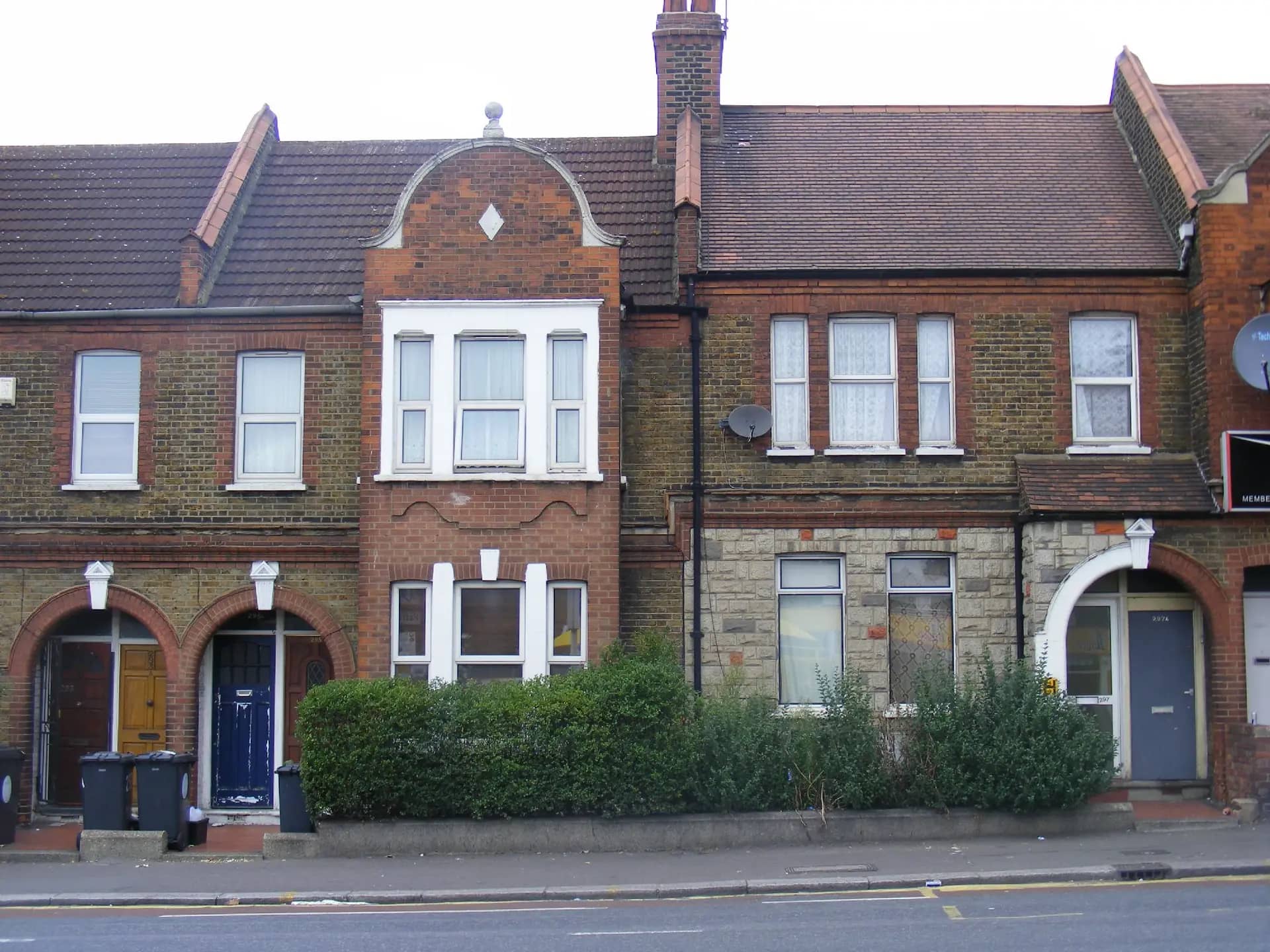
Photo: sludgegulper, BY-SA 2.0
Each condition has its own words, and the details must answer those words. A neat sample board that ignores a requirement for a mortar specification is refused. We match each document to the wording of the condition it answers.
If the council says no, or says nothing
If the details are refused, the council gives reasons, and you can amend and resubmit. If the council has not decided within the period, you can appeal against the failure to decide.
The figures in this article, and where they come from
A council must give notice of its decision on a condition application within 8 weeks, or a longer period agreed in writing.
Source: legislation.gov.uk, Development Management Procedure Order 2015, article 27(2)An application for approval of a condition must identify the planning permission and include the particulars and drawings needed (article 27(1)).
Source: legislation.gov.uk, Development Management Procedure Order 2015, article 27The fee for a request for written confirmation of compliance is refunded if the request is not decided within 12 weeks.
Source: GOV.UK, Fees for planning applications (paragraph 043)Planning fees rise every 1 April by the Consumer Prices Index of the previous September, capped at 10%.
Source: GOV.UK, Fees for planning applicationsIn England a council has 10 years to take enforcement action against operational development, from the date it was substantially completed.
Source: legislation.gov.uk, Town and Country Planning Act 1990, section 171BNothing in the GPDO permits development contrary to any condition of a planning permission (article 3(4)).
Source: legislation.gov.uk, GPDO 2015, article 3(4)
Questions people ask
What is a pre-commencement condition?
It is a condition that must be satisfied before any development begins. Typical examples are materials samples, a construction management plan or tree protection. Starting work before it is discharged breaches the permission.
Can I discharge all conditions in one application?
Often yes. Grouping them saves a fee and a review, but it can slow things if one condition is hard to resolve. We advise which to bundle, and which to send first so work can start.
What happens if I started work before the condition was cleared?
It is a breach of the permission. The council can take enforcement action, and you may need to apply to regularise it. Tell us the position and we advise before you do anything else.
Do I need to discharge conditions on a permitted development project?
Permitted development has its own conditions in the Order, such as similar materials, but no application is needed to discharge them. Conditions on a granted planning permission are the ones you apply to discharge.
Can I change the details after they are approved?
Small changes can sometimes go through an amendment. Our non-material amendment service starts at £305. Larger changes need a fresh application.
Discharge of Planning Conditions: from £365
What you get
- Drawings and details the conditions ask for
- Council submission
- A written list of which conditions need details and before what stage
The total you pay, fixed in writing before you commit. Council fees are separate and paid to the council. Prices checked 24 October 2026.
How our discharge of planning conditions service works