A planning constraints report for a London address costs £19 with us. It checks the address for conservation area, Article 4 direction, listing and flood risk, and it is credited against drawings if you go ahead.
These four checks decide most householder projects. They tell you whether permitted development applies, whether you need listed building consent, and whether a flood risk assessment will be asked for. You can look each one up yourself, using free government and council maps, and this article shows how. The report saves the legwork and puts the four answers together.
What the report gives you
The £19 buys four answers for your address: is it in a conservation area, is it covered by an Article 4 direction, is the building or a neighbour listed, and which flood zone is it in. It is credited against drawings if you go ahead with us, so the check costs nothing extra on a project.
Conservation areas
Conservation areas are defined by the Planning (Listed Buildings and Conservation Areas) Act 1990 as areas of special architectural or historic interest, the character or appearance of which it is desirable to preserve or enhance. The government's planning data platform publishes the boundaries as a dataset you can search by address.
The effect on householders is concrete. On this kind of land, called article 2(3) land, a roof extension under Class B is not permitted, and neither is an extension beyond a side wall of the original house under Class A. The council must also pay special attention to the character or appearance of the area under section 72 of the 1990 Act.
Article 4 directions
An Article 4 direction is a council's decision that a form of permitted development needs an application in a defined area. The planning data platform describes the article 4 direction areas dataset as information on areas where this applies, used to require an application for work that would otherwise be permitted development.
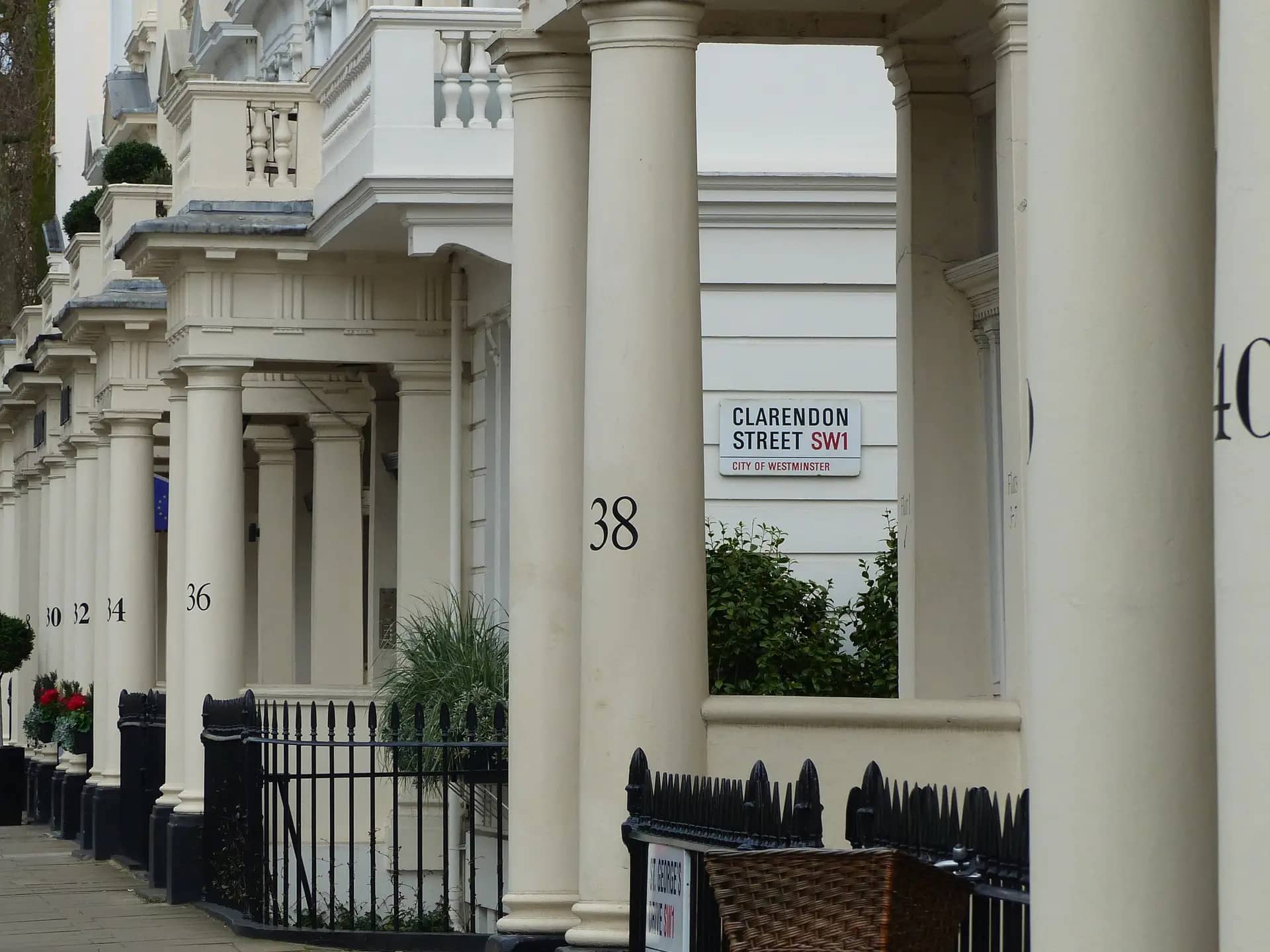
Photo: Ruth Sharville, BY-SA 2.0
Directions vary. One may remove the right to change windows on a front elevation; another may remove the right to convert a house into a small HMO. Always read the direction itself, not only the fact that one exists, since the missing right might not be the one you need.
Listing and flood zone
A listed building needs listed building consent for works that affect its character, under section 7 of the 1990 Act. A neighbour's listing matters too, since the council must have regard to the setting of a listed building. The National Heritage List for England is searchable by address.
Flood risk is a map check. Government guidance tells you, as a first step, to use the Flood Map for Planning, and to look at the Strategic Flood Risk Assessment held by the local planning authority. A site in Flood Zone 2 or 3 may need a flood risk assessment with a planning application.
| Check | Where to look yourself | What it changes |
|---|---|---|
| Conservation area | Planning data platform or the council's map | Side and roof extensions lose permitted development |
| Article 4 direction | The council's planning pages | A named right is removed in the area |
| Listing | National Heritage List for England | Listed building consent for works affecting character |
| Flood zone | Flood Map for Planning | A flood risk assessment may be needed |
What to do with the answers
A clean result is as useful as a flagged one: it tells you the standard permitted development rights apply, and that you can plan on that basis.
The figures in this article, and where they come from
The 1990 Act defines conservation areas as areas of special architectural or historic interest, the character or appearance of which it is desirable to preserve or enhance.
Source: GOV.UK, Planning data: conservation area dataset (1990 Act definition)Class B roof extensions are not permitted on article 2(3) land, which includes conservation areas.
Source: legislation.gov.uk, GPDO 2015, Schedule 2, Part 1, Class B, B.1(f)On article 2(3) land, Class A does not permit an extension beyond a side wall of the original house.
Source: legislation.gov.uk, GPDO 2015, Schedule 2, Part 1, Class A, A.2(b)Article 4 allows a council to direct that the permission granted by article 3 does not apply to a Class of development in a specified area.
Source: legislation.gov.uk, GPDO 2015, article 4Section 7 of the 1990 Act bars works to alter or extend a listed building in a way that affects its character unless authorised.
Source: legislation.gov.uk, Planning (Listed Buildings and Conservation Areas) Act 1990, section 7A minor extension, for flood standing advice, is a householder or non-domestic extension of no more than 250 square metres in Flood Zone 2 or 3.
Source: GOV.UK, Flood risk assessment: standing advice
Questions people ask
Can I do these checks myself?
Yes. The conservation area and Article 4 maps are published by councils and on the government's planning data platform, listings are on the National Heritage List, and the flood zone is on the Flood Map for Planning. The report saves you the time and gathers the answers in one place.
What does a constraints report not cover?
It covers the four checks. It does not value your land, check the title or give legal advice, and it is not a planning decision. For a view on what you could build, our pre-purchase report is the next step.
Is my house in a conservation area if the street is?
Usually, but boundaries can run through a street. Boundaries can run through a street, so check the address rather than the street name.
Does a clean result mean I can build anything?
No. It means the constraints we checked do not apply. The ordinary permitted development limits still do, and so do other rules, such as a planning condition on the house. A pre-purchase report from £205 goes further.
How is the fee credited?
If you go ahead with drawings with us, the report fee is credited against them. You do not pay for the same check twice.
Planning Constraints Report: from £19
What you get
- Conservation area, Article 4, listing and flood checks
- Credited against drawings if you go ahead
- Four constraints checked for your address
The total you pay, fixed in writing before you commit. Council fees are separate and paid to the council. Prices checked 24 October 2026.
How our planning constraints report service works