A householder flood risk assessment for an extension in London costs £415 with us. It is written to the government's standing advice for minor extensions, and it is what a council asks for when your site lies in Flood Zone 2 or 3.
Most London homes are in Flood Zone 1 and need nothing. Along the Thames, the Lea, the Wandle and other rivers, and on land behind tidal defences, they are not. If yours is one of those, a short, well-judged assessment lets the council decide. This article explains when it is needed, what goes in it, and why the finished floor level matters more than anything else.
What the fixed fee covers
Our £415 covers a flood risk assessment for a household extension, written to follow the Environment Agency and government standing advice. We confirm the flood zone for the address, set out the site and the proposal, state the estimated flood level, show the finished floor levels and describe the resistance and resilience measures. It is written to go with your planning application.
It does not replace drawings. The levels on the assessment must match the sections on the plans, so the two are worth preparing together.
When the council asks for one
Government guidance on flood risk assessment standing advice sets the test. It tells applicants to follow the advice for minor extensions in Flood Zone 2 or 3. A minor extension is a householder or non-domestic extension with a floor space of no more than 250 square metres.
A site in Flood Zone 1 may also need an assessment where the council's strategic flood risk assessment shows a local risk, or where surface water is a known problem. Check the flood map for planning for your address first. If the site is in Flood Zone 1 and no local issue is flagged, you can usually proceed without one.
| Flood zone | Extension of 250 square metres or less | What to submit |
|---|---|---|
| Zone 1, low probability | Usually no assessment | Nothing, unless a local risk is flagged |
| Zone 2, medium probability | Follow the minor extension standing advice | A short assessment with floor levels |
| Zone 3a, high probability | Follow the minor extension standing advice | A short assessment with floor levels and resilience measures |
| Zone 3b, functional floodplain | Development generally not permitted unless water compatible | Take advice before drawing |
What the assessment must contain
- The site and the proposal, with the flood zone and the source of flooding.
- The estimated flood level for the development, allowing for climate change over its lifetime.
- The finished floor levels of the extension, set against that flood level.
- Flood resistance and resilience measures, such as raised electrics, flood-resistant materials and drainage.
- Supporting plans and drawings that match the figures.
Where the floor cannot be raised to the required height, the standing advice says the design should prioritise excluding flood water where possible and speed recovery if water gets in. A ground-floor extension to a house that sits low in the street often falls into this category, and the measures described then do the work.
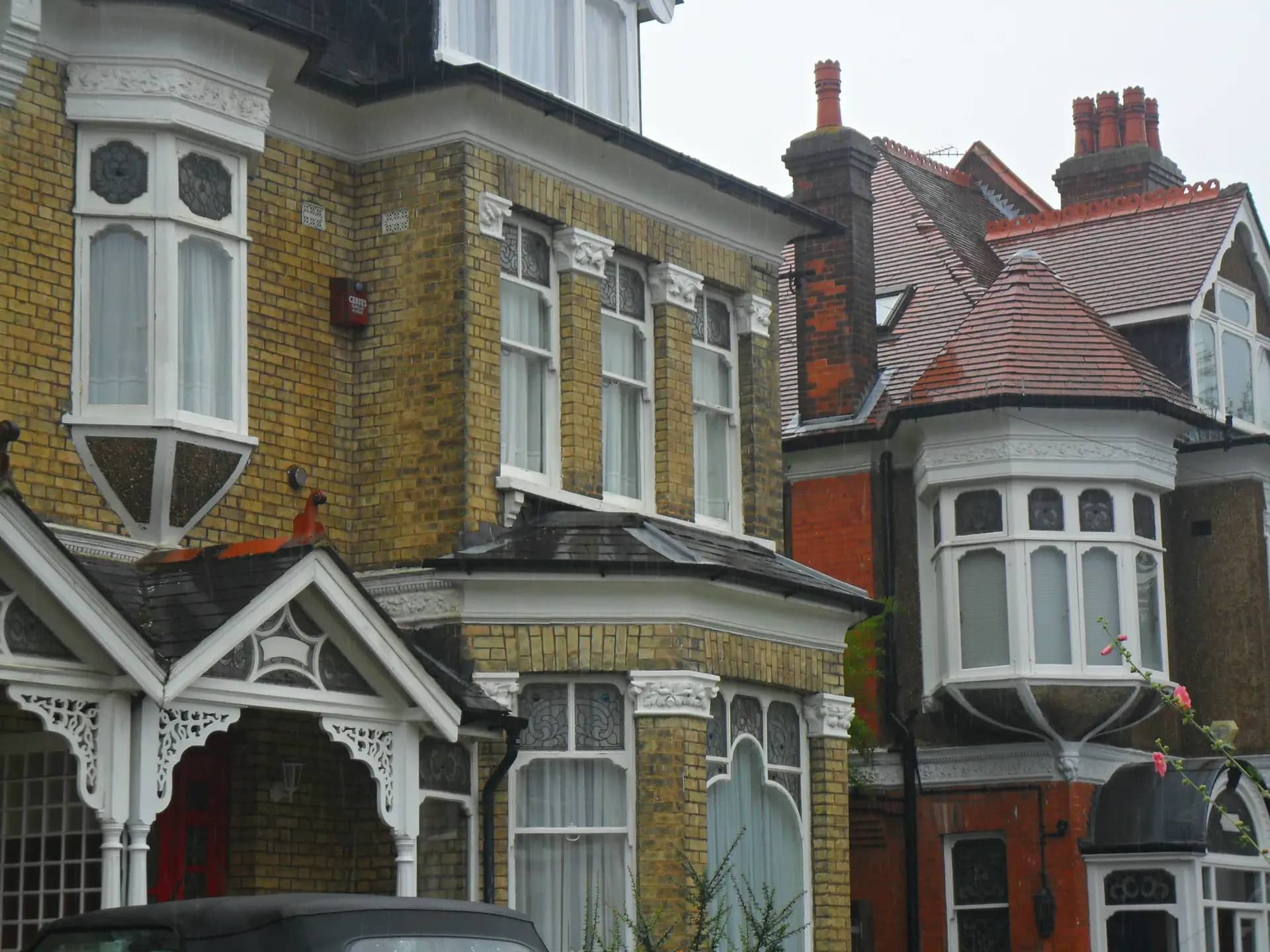
Photo: A P Monblat, BY-SA 3.0
After the assessment
The local planning authority decides with the assessment in front of it. The statutory period for a householder-scale application is 8 weeks from the day after the council receives it.
The figures in this article, and where they come from
A minor extension for the standing advice is a householder or non-domestic extension with a floor space of no more than 250 square metres.
Source: GOV.UK, Flood risk assessment: standing adviceApplicants should follow the standing advice for minor extensions to complete an assessment for a minor extension in Flood Zone 2 or 3.
Source: GOV.UK, Flood risk assessment: standing adviceIn Flood Zone 2 or 3, the standing advice says the assessment should give the estimated flood level, including climate change over the lifetime of the development, and details of finished floor levels.
Source: GOV.UK, Flood risk assessment: standing adviceIn Flood Zone 2 or 3, where floor levels cannot be raised to the required height, the design should prioritise excluding flood water and speed recovery in case water gets in.
Source: GOV.UK, Flood risk assessment: standing adviceA council has 8 weeks to decide a non-major application from the day after it receives it.
Source: legislation.gov.uk, Development Management Procedure Order 2015, article 34
Questions people ask
How do I know my flood zone?
Enter the address in the government's flood map for planning. It shows Flood Zones 1, 2 and 3 for rivers and the sea. We check it, and the council's own flood risk information, before we quote.
Is the assessment needed for permitted development?
Permitted development does not need a planning application, so the council does not ask for an assessment. The flood risk is still real, and a lender or insurer may care. A short assessment still protects you.
Does the extension have to be raised?
Where it is practical, finished floor levels are set above the estimated flood level. Where it is not, for example to line up with the existing floor, the assessment explains the resistance and resilience measures that make the extension safe to occupy.
Will the Environment Agency be involved?
Minor extensions that follow the standing advice are decided by the council on that basis. Larger schemes and Flood Zone 3b sites are different, and we say when a case needs more.
What does flood resilient design look like in a house?
Raised sockets and a consumer unit, solid floors with water-resistant finishes, non-return valves on drains, and fittings that dry out and can be cleaned. The assessment lists the ones relevant to your extension.
Householder Flood Risk Assessment: from £415
What you get
- Assessment to the Environment Agency standing advice
- Flood zone and local risk confirmed for the address
- Levels set out to match your drawings
The total you pay, fixed in writing before you commit. Council fees are separate and paid to the council. Prices checked 24 October 2026.
How our householder flood risk assessment service works