MCIAT chartered drawings · Fixed fees across all 33 London boroughs
Services
Areas
Guides
ProcessOur promiseFAQ
Free approval reportGet my free quote020 7864 7245
Planning appeal drawings in Mole Valley — a refused scheme reworked for appeal
Mole Valley · Appeals & Refusals

Planning appeal drawings in Mole Valley

Refused by Mole Valley District Council? We read the decision notice, tell you honestly whether to appeal or resubmit, and prepare the drawings and statement that answer each reason for refusal on the Planning Inspectorate's terms.

★★★★★ Rated 4.9/5 by London homeowners96% approval rate · 2,400+ drawings delivered
Share

Householder planning in Mole Valley — the record

Mole Valley District Council granted 83% of the householder planning decisions it made in its latest published year — 4 points below the 87% England-wide householder average. Metropolitan Green Belt covers the bulk of the district and the adopted plan releases well under one per cent of it, so countryside development is tightly controlled, which is where a policy-literate drawing pack earns its keep. Its dominant Victorian (1837–1901), Edwardian (1901–1910), interwar (1918–1939) and postwar (1945–1970) housing stock sets the design brief on most streets.

The permitted-development ceilings are fixed: 40m³ of new roof volume for a terraced loft and 50m³ for a semi or detached house under Class B, plus a 3m single-storey rear extension on a terrace or 4m on a detached house under Class A. Mole Valley carries at least one Article 4 direction, and conservation areas including Dorking, Leatherhead and Brockham remove those rights outright, so we confirm your exact address before a line is drawn. A validated householder application in Mole Valley is determined against an 8-week statutory target.

Dorking (a historic market town with a Victorian and Edwardian core, a conservation area and an Article 4 direction), Leatherhead (a market town of mixed period and postwar housing with a conservation area and an Article 4 direction), Great Bookham (an affluent commuter village with its own conservation-area character), Fetcham (largely interwar and postwar suburban semis and detached houses near Leatherhead), Brockham (a green-belt village around a classic green with a conservation area and an Article 4 direction) and Westhumble (a small Surrey Hills village of detached rural stock below Box Hill) — these are the Mole Valley pockets our drawings cover most. Heritage designations here include Dorking, Leatherhead, Brockham, Great Bookham and Little Bookham. Mole Valley District Council weighs each proposal against the Mole Valley Local Plan 2020–2039 (adopted October 2024), where the Surrey Hills National Landscape (AONB) covers much of the south and west around Dorking and Box Hill, where landscape scrutiny is heightened. Converted flats appear around Dorking and Leatherhead town centres, and none of them hold householder permitted-development rights.. On roofs the borough is dual-pitch tiled roofs on the town villas and terraces and hipped roofs on the interwar suburban semis, over Victorian and Edwardian terraces and villas in the market towns of Dorking and Leatherhead, interwar and postwar suburban semis and detached houses around the towns, substantial detached housing and period cottages in the green-belt and Surrey Hills villages and larger rural country properties to the south and west.

Appeal or resubmit after a Mole Valley refusal?

Two routes exist and they suit different refusals. A free-go resubmission — a fresh application within twelve months of the refusal, on the same site and in the same description — costs no fee and lets you change the scheme. An appeal keeps the scheme as refused and asks an Inspector to disagree with Mole Valley District Council. Where the refusal reasons are about design detail that can be fixed, resubmission is usually faster; where they are about principle, an appeal is the only route that resolves it.

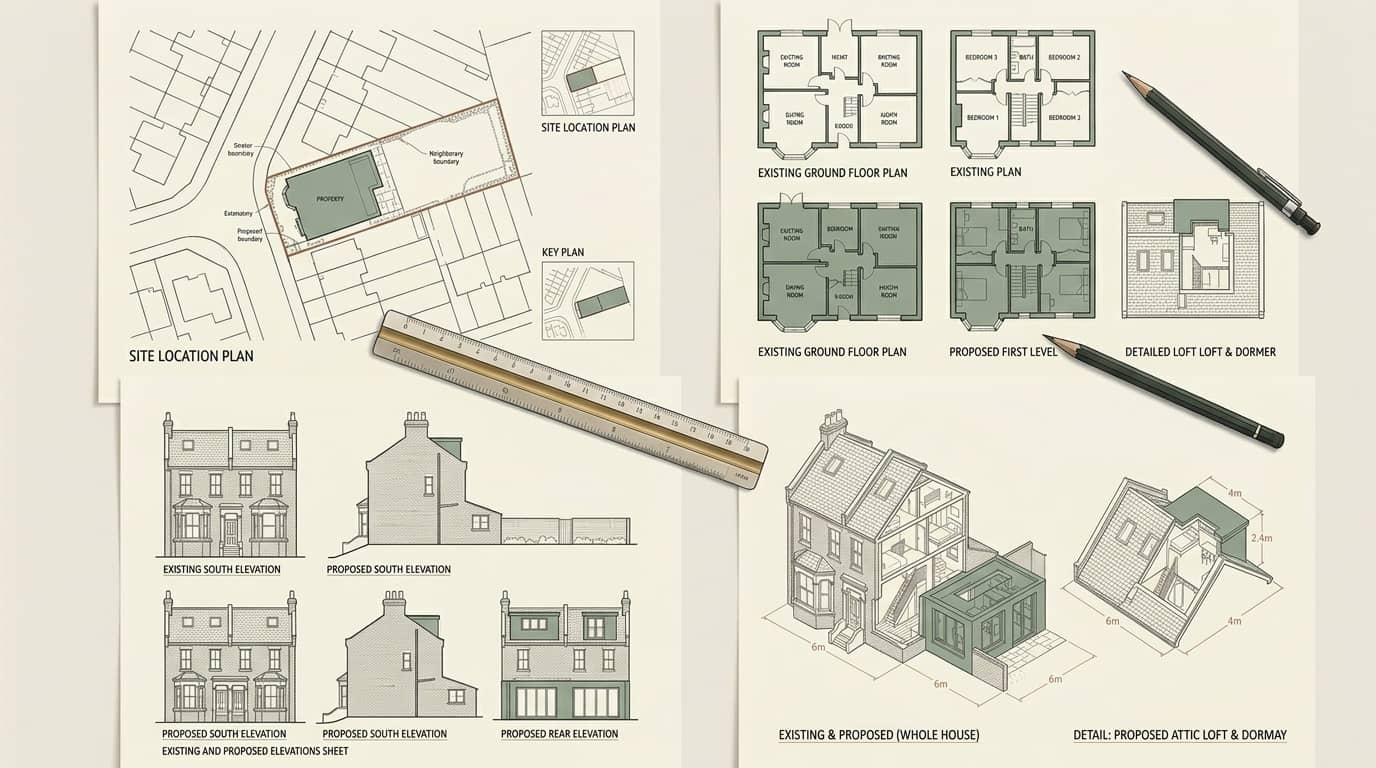
The decision notice is the brief. Each numbered reason cites policy and states a harm, and the appeal has to meet each one with evidence — sections showing daylight, elevations showing the relationship to neighbours, a site plan proving separation distances. Assertion loses appeals. Mole Valley is largely Victorian and Edwardian terraces and villas in the market towns of Dorking and Leatherhead, interwar and postwar suburban semis and detached houses around the towns, substantial detached housing and period cottages in the green-belt and Surrey Hills villages and larger rural country properties to the south and west, and dual-pitch tiled roofs on the town villas and terraces and hipped roofs on the interwar suburban semis shape what the Inspector will accept as characteristic here.

Metropolitan Green Belt covers the bulk of the district and the adopted plan releases well under one per cent of it, so countryside development is tightly controlled, which frequently appears in refusal reasons and therefore has to be addressed head-on. Mole Valley has Article 4 directions removing permitted-development rights in the Dorking, Leatherhead and Brockham conservation areas, so that features contributing to their character cannot be altered without consent.

Appeal statement and drawings prepared after a refusal in Mole Valley

When is a Mole Valley refusal worth appealing?

We give an honest read of the decision notice first. An appeal is usually the right route where:

  • The refusal turns on a matter of principle rather than a detail you could redesign
  • The reasons cite policies that do not fairly apply to your site
  • Comparable schemes nearby were approved on the same street or by the same authority
  • The officer's report recommended approval and members refused against it
  • The refusal relies on a harm that the drawings can demonstrably disprove
  • You are inside the deadline — 12 weeks for householder appeals, 6 months for most others
  • The scheme's conflict is with character in a designated area such as Dorking and Leatherhead, and a heritage case can be evidenced

Mole Valley refusal record — live from council data

Below is Mole Valley District Council's real decision record, drawn from official planning statistics and refreshed as new data lands. Mole Valley grants a lower share of applications than the national average, with near-total Green Belt coverage and the Surrey Hills AONB the constraints behind most refusals of larger schemes. Knowing what this authority actually refuses, and why, is the starting point for deciding whether to appeal or to redesign.

Source: MHCLG planning application statistics (householder decisions, England, 1 April 2025 - 31 March 2026). Compare every borough on our London approval-rate league table.

76%householder applications approved in Mole Valley
87%national average — Mole Valley is 11 points below the national average

Ready for drawings your council will approve?

Tell us about your project and get a fixed, no-obligation quote back within one working day. If you don't need planning permission at all, we'll tell you that too — for free.

Get your free fixed quote

60 seconds now. A fixed, no-obligation quote back within one working day — and we'll tell you if you don't even need planning.

No obligation · No spam · Reply within 1 working day

What wins appeals in Mole Valley

Across Dorking, Leatherhead and Great Bookham, the appeals that succeed are narrow and evidenced. They show the daylight test drawn rather than described, they cite the Inspector's own decisions on comparable sites, and they concede the points that are not worth arguing so the case concentrates on the ones that are. An appeal that disputes every reason equally reads as unfocused and usually fails on the strongest one.

The Surrey Hills National Landscape (AONB) covers much of the south and west around Dorking and Box Hill, where landscape scrutiny is heightened. Most householder appeals are decided by written representations, with the Inspector visiting the site unaccompanied. That makes the drawings the primary evidence: what is not on the page is not in front of the Inspector. We prepare the set on that basis, and where the honest answer is that the refusal was sound, we say so and redesign instead.

Scheme in Mole Valley reworked and approved following an appeal

Appeals across Mole Valley

We prepare appeal drawings and statements across Mole Valley. A few of the areas where refusals come up most often:

Dorking

Appeal drawings for Dorking — a historic market town with a Victorian and Edwardian core, a conservation area and an Article 4 direction — answering Mole Valley District Council's reasons for refusal with evidence rather than assertion.

Leatherhead

Appeal drawings for Leatherhead — a market town of mixed period and postwar housing with a conservation area and an Article 4 direction — answering Mole Valley District Council's reasons for refusal with evidence rather than assertion.

Great Bookham

Appeal drawings for Great Bookham — an affluent commuter village with its own conservation-area character — answering Mole Valley District Council's reasons for refusal with evidence rather than assertion.

Fetcham

Appeal drawings for Fetcham — largely interwar and postwar suburban semis and detached houses near Leatherhead — answering Mole Valley District Council's reasons for refusal with evidence rather than assertion.

Brockham

Appeal drawings for Brockham — a green-belt village around a classic green with a conservation area and an Article 4 direction — answering Mole Valley District Council's reasons for refusal with evidence rather than assertion.

Westhumble

Appeal drawings for Westhumble — a small Surrey Hills village of detached rural stock below Box Hill — answering Mole Valley District Council's reasons for refusal with evidence rather than assertion.

Appeal, resubmit or redesign after a Mole Valley refusal?

Three responses to a refusal, with different costs, timescales and prospects.

RouteDeadlineTypical timescaleBest where
Householder appeal12 weeks from the decisionAbout 8–12 weeksThe refusal turns on principle or a disputed harm
Section 78 appeal (other)6 months from the decisionSeveral monthsLarger schemes, change of use, new dwellings
Free-go resubmission12 months from the decision8 weeksThe reasons are fixable design detail
Fresh application, redesignedNo deadline8 weeksThe scheme needs a different approach entirely

Deadlines from the Town and Country Planning Act 1990, section 78, and the Planning Inspectorate's published appeal procedures.

Four steps from refusal to decision in Mole Valley

A process built around the decision notice, because that is what the Inspector reads first.

  1. 1

    Free refusal review

    Send us the decision notice and the refused drawings. We tell you honestly whether the reasons are appealable, whether a resubmission is faster, and how Mole Valley District Council has fared on comparable appeals.

  2. 2

    Evidence and comparables

    We gather the material that answers each reason — daylight geometry, separation distances, decided appeals on similar sites, and the relevant policies read in full rather than in extract.

  3. 3

    Appeal drawings & statement

    We prepare the drawings the Inspector needs and a statement of case that takes each numbered reason in turn, conceding what should be conceded and evidencing the rest.

  4. 4

    Submission & follow-through

    We lodge the appeal inside the deadline, respond to the council's statement, and revise free until the Inspector issues a decision.

Frequently asked questions

How long do I have to appeal a planning refusal in Mole Valley?

Twelve weeks from the date on the decision notice for a householder appeal, and six months for most other section 78 appeals. The deadline is strict and the Planning Inspectorate will not accept a late appeal, so the first thing we do on a Mole Valley refusal is check the date and work backwards from it. Mole Valley District Council is the decision-maker.

Is it better to appeal or resubmit after a Mole Valley District Council refusal?

It depends what the reasons say. If they identify design detail you are willing to change, a free-go resubmission within twelve months costs no application fee and usually resolves faster. If they refuse the principle — that an extension of this type does not belong here at all — only an appeal settles it, because a resubmission would meet the same objection. This applies to your Mole Valley address specifically. Mole Valley District Council is the decision-maker.

What are my chances of winning a planning appeal in Mole Valley?

Nationally, a minority of householder appeals succeed, and the ones that do tend to be narrow, evidenced and focused on a single disputed harm. We look at how Mole Valley District Council's refusals have fared at appeal and at comparable decisions nearby before advising, and we will tell you when we think the refusal was sound — an appeal with no prospect costs months.

Do I need new drawings for a planning appeal in Mole Valley?

The scheme itself cannot change on appeal — the Inspector determines the application as refused. What usually needs preparing is evidence: sections showing daylight, elevations showing the relationship to neighbours, and context drawings showing what already exists on the street. Those explain why the refused scheme causes no harm, without altering it. This applies to your Mole Valley address specifically. Mole Valley District Council is the decision-maker.

Does the Inspector visit the site in Mole Valley?

In most written-representation appeals, yes — usually unaccompanied, viewing the site from public land and neighbouring property where access is arranged. That is why the drawings matter so much: the Inspector sees the site once, briefly, and everything else comes from the paperwork you submitted. This applies to your Mole Valley address specifically. Mole Valley District Council is the decision-maker.

Can I claim costs against Mole Valley District Council on appeal?

Only where the council has behaved unreasonably — refusing against its own officer's clear recommendation without evidence, or failing to substantiate a reason for refusal. Costs awards are the exception rather than the norm, and they are decided separately from the appeal itself. Where the grounds genuinely exist, we make the application alongside the appeal. This applies to your Mole Valley address specifically. Mole Valley District Council is the decision-maker.

How much do appeal drawings in Mole Valley cost?

We quote each Mole Valley appeal individually after reading the decision notice, because the work depends entirely on how many reasons are in play and what evidence they demand, and send a fixed, no-obligation quote within one working day. The refusal review itself is free. Call 020 7864 7245 to start. Mole Valley District Council is the decision-maker.

Planning approval report

Know your approval odds before you spend a penny on drawings

Answer five quick questions and get a free planning score for your exact address — instantly. Then, if you want the full picture, unlock the detailed analysis: your council's live approval rates, local precedents, constraints on your street and a step-by-step route to permission.

Planning appeal drawings across London's Outskirts

Same fixed quotes, same fast drawings — wherever your project is.

Other planning services in Mole Valley