MCIAT chartered drawings · Fixed fees across all 33 London boroughs
Services
Areas
Guides
ProcessOur promiseFAQ
Free approval reportGet my free quote020 7864 7245
Orangery and conservatory plans in Wormley and Turnford — a glazed garden room added to the rear of a house
Wormley and Turnford · Orangery & Conservatory Drawings

Orangery and conservatory plans in Wormley and Turnford

Orangery and conservatory drawings for Wormley and Turnford homes — checked against the Class A rear limits and the 30m² building-regulations exemption, drawn to Broxbourne Borough Council's guidance and revised free until your decision.

★★★★★ Rated 4.9/5 by London homeowners96% approval rate · 2,400+ drawings delivered
Share

What the data says about planning in Wormley and Turnford

Broxbourne Borough Council granted 93% of the householder planning decisions it made in its latest published year — 6 points above the 87% England-wide householder average. Wormley and Turnford contains Wentworth Cottages, Wormley conservation areas (Wentworth Cottages designated 1985), so materials, fenestration and roof form are assessed against the appraisal, which is where a policy-literate drawing pack earns its keep. Its dominant postwar (1945–1970) housing stock sets the design brief on most streets.

Class A and Class B set the thresholds — a rear dormer to 40m³ on a terrace or 50m³ on a semi or detached, and a single-storey rear extension to 3m on a terrace or 4m on a detached house — beyond which Broxbourne Borough Council needs a full application. In conservation areas such as Wentworth Cottages and Wormley those rights are removed, so we confirm your exact address before a line is drawn. A validated householder application in Wormley and Turnford is determined against an 8-week statutory target.

Wentworth Cottages (conservation area designated in 1985) and Wormley (conservation area designated in 1979) — these are the Wormley and Turnford pockets our drawings cover most. Heritage designations here include Wentworth Cottages and Wormley. Broxbourne Borough Council weighs each proposal against Broxbourne Borough Council's adopted local plan and its householder design guidance, where the 4,440 homes here are 36% 1973-1982, 11% 2000-2008, 10% 1965-1972, which is what sets the realistic roof and rear-projection options. On roofs the borough is shallow trussed roofs typical of 1970s building and trussed-rafter roofs typical of 2000s building, over 1970s and early-1980s houses (36% of 4,440 homes), 2000s houses and apartments (11%) and late-1960s and early-1970s houses (10%).

Designations, stock and decisions in Wormley and Turnford

Heritage designation is the single biggest variable in Wormley and Turnford, and it is address-specific: Wentworth Cottages (conservation area designated in 1985) and Wormley (conservation area designated in 1979). Inside those boundaries permitted development is curtailed and Broxbourne Borough Council assesses materials, window detail and roof form against the area's own appraisal, so a scheme that would be waved through two streets away can need a full application here.

No Article 4 direction is recorded for Broxbourne Borough Council, but Wormley and Turnford's 2 conservation areas still limit permitted development on those streets.

On stock, Wormley and Turnford is 1970s and early-1980s houses (36% of 4,440 homes), 2000s houses and apartments (11%) and late-1960s and early-1970s houses (10%) — which is why shallow trussed roofs typical of 1970s building and trussed-rafter roofs typical of 2000s building govern what a loft or rear projection can realistically be. Broxbourne Borough Council decided 280 householder applications in the latest published year and granted 93%, with 53% issued inside the eight-week target. We work from the council's own published record.

The full build-period split for Wormley and Turnford runs pre-1900 4% (170 homes), 1900-1918 1% (30 homes), 1919-1929 1% (50 homes), 1930-1939 4% (190 homes), 1945-1954 2% (90 homes), 1955-1964 3% (150 homes), 1965-1972 10% (460 homes), 1973-1982 36% (1,610 homes), 1983-1992 9% (390 homes), 1993-1999 8% (350 homes) and 2000-2008 11% (510 homes). That distribution is why pre-1900 detailing dominates the drawings here, and it is measured from council-tax records rather than assumed from the street name.
The published numbers behind a Wormley and Turnford application

Published figures for Wormley and Turnford and Broxbourne Borough Council. These are the numbers that decide what is realistic on your street, so we work from them rather than from national averages.

MeasureWormley and Turnford
Dwellings recorded4,440
Built pre-1900170 (4%)
Built 1900-191830 (1%)
Built 1919-192950 (1%)
Built 1930-1939190 (4%)
Built 1945-195490 (2%)
Built 1955-1964150 (3%)
Built 1965-1972460 (10%)
Built 1973-19821,610 (36%)
Built 1983-1992390 (9%)
Built 1993-1999350 (8%)
Built 2000-2008510 (11%)
Built before 19195%
Built 1919–19395%
Built 1945–200880%
Conservation areas in Wormley and Turnford2 (Wentworth Cottages, Wormley)
Conservation areas district-wide6
Article 4 directions recorded0
Householder applications decided280
Householder applications granted93%
Decided within 8 weeks53%

Dwelling stock from VOA council-tax data at 31 March 2025; conservation-area and Article 4 counts from planning.data.gov.uk (MHCLG); decision figures are Broxbourne Borough Council's own, from MHCLG live table PS2 for the year to 31 March 2026.

Orangery or conservatory — what changes in Wormley and Turnford

The difference is not marketing. A conservatory is predominantly glazed — at least three quarters of the roof and half of the walls — which is what earns it the building-regulations exemption. An orangery has a solid masonry perimeter with a glazed lantern set into a flat roof, so it usually reads as a conventional extension for building control and has to meet Part L thermal standards, Part A structure and Part B fire like any other room.

Both are judged the same way for planning: as rear extensions, against the Class A depth, height and eaves limits, and against Broxbourne Borough Council's adopted local plan and its householder design guidance. Wormley and Turnford is largely 1970s and early-1980s houses (36% of 4,440 homes), 2000s houses and apartments (11%) and late-1960s and early-1970s houses (10%), and the design question is usually whether the glazing reads as a lightweight addition to that stock or as a bolted-on conservatory kit. On period houses, an orangery with a properly proportioned lantern almost always sits better than a full-height glazed box.

In conservation areas such as Wentworth Cottages and Wormley, rear glazing is assessed on visibility from the street and on the effect on the rear elevation's character. No Article 4 direction is recorded for Broxbourne Borough Council, but Wormley and Turnford's 2 conservation areas still limit permitted development on those streets.

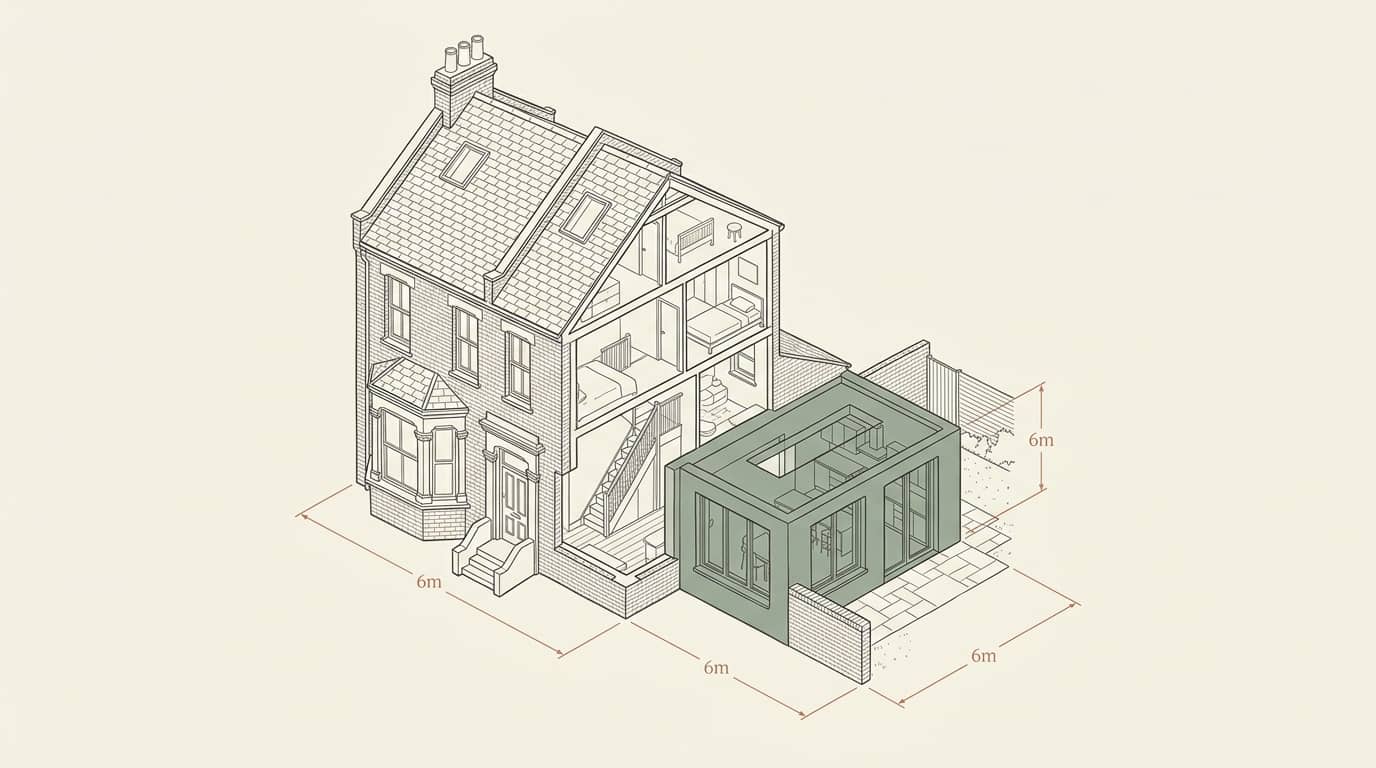
Isometric orangery drawing for a Wormley and Turnford house

Does a conservatory need planning permission in Wormley and Turnford?

Many conservatories are permitted development. You will need an application to Broxbourne Borough Council where any of these apply:

  • The projection exceeds 3 metres on a terraced or semi-detached house, or 4 metres on a detached house
  • The eaves exceed 3 metres where the structure is within 2 metres of a boundary
  • More than half the land around the original house would be covered by buildings
  • The conservatory is to the side and wider than half the original house
  • The house is on designated land such as Wentworth Cottages and Wormley, where rear-extension rights are restricted
  • The building is listed — listed building consent is required as well

Wormley and Turnford extension decisions — live from council data

Below is Broxbourne Borough Council's real householder decision record, drawn from official planning statistics and refreshed as new data lands. Broxbourne Borough Council granted 93% of its householder applications in the year to 31 March 2026, and Wentworth Cottages shapes what is approved here. Glazed rear additions are judged on depth, eaves height and how the glazing meets the existing elevation.

Source: MHCLG planning application statistics (householder decisions, England, 1 April 2025 - 31 March 2026). Compare every borough on our London approval-rate league table.

93%householder applications approved in Broxbourne
87%national average — Broxbourne is 6 points above the national average

Ready for drawings your council will approve?

Tell us about your project and get a fixed, no-obligation quote back within one working day. If you don't need planning permission at all, we'll tell you that too — for free.

Get your free fixed quote

60 seconds now. A fixed, no-obligation quote back within one working day — and we'll tell you if you don't even need planning.

No obligation · No spam · Reply within 1 working day

What glazed rear additions get approved in Wormley and Turnford

Across Wentworth Cottages and Wormley, the schemes that succeed keep the eaves below the neighbour's ground-floor cill line, set the glazing back from the boundary, and use a solid parapet or brick perimeter to tie the addition into the house. On 1970s and early-1980s houses (36% of 4,440 homes), a lantern set in a flat roof usually reads better than a pitched glazed roof, and it avoids the summer overheating that makes full conservatories unusable for months a year.

Wormley and Turnford contains Wentworth Cottages, Wormley conservation areas (Wentworth Cottages designated 1985), so materials, fenestration and roof form are assessed against the appraisal. The decision worth making early is whether to keep the separating doors. Keeping them preserves the building-regulations exemption but leaves you with a room that is not part of the house; removing them creates one continuous space but brings the whole addition inside Part L, which changes the glazing specification and usually the heating design too. We set out both versions before you commit.

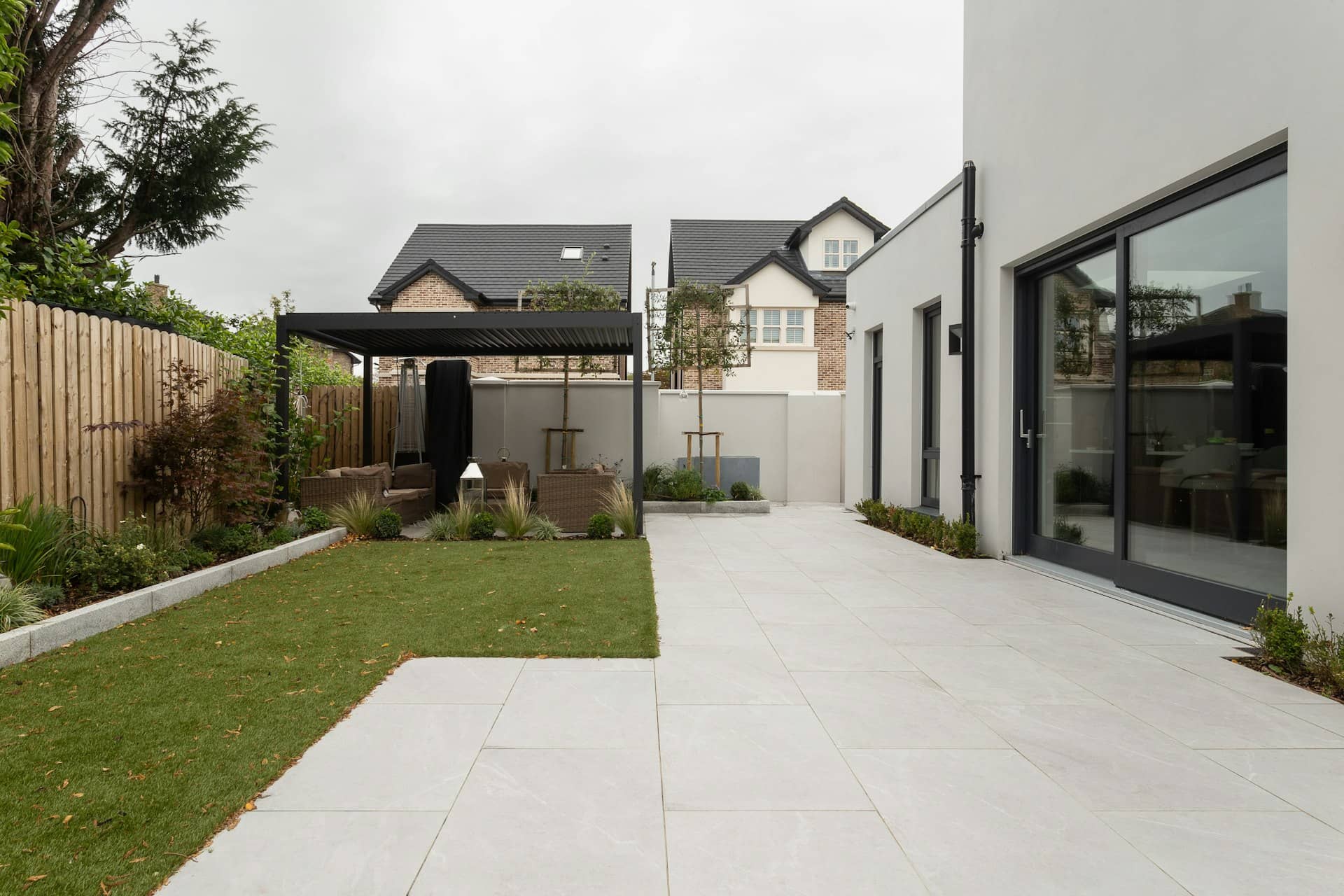
Orangery extension to the rear of a house in Wormley and Turnford

Orangeries and conservatories across Wormley and Turnford

We draw glazed rear additions across Wormley and Turnford. A few of the areas where they come up most often:

Wentworth Cottages

Orangery and conservatory drawings for Wentworth Cottages — conservation area designated in 1985 — checked against the Class A limits and drawn to Broxbourne Borough Council's guidance.

Wormley

Orangery and conservatory drawings for Wormley — conservation area designated in 1979 — checked against the Class A limits and drawn to Broxbourne Borough Council's guidance.

Conservatory or orangery in Wormley and Turnford — which rules apply?

The planning test is the same for both. The building-regulations test is not.

StructurePlanning routeBuilding regulationsPractical effect
Conservatory under 30m², doors retainedClass A rear extension limitsLargely exemptCheaper build, unheated in winter
Conservatory, doors removedClass A rear extension limitsPart L applies in fullContinuous space, higher spec glazing
Orangery with solid perimeter and lanternClass A rear extension limitsFully regulatedUsable year round, better on period houses
Any of the above beyond the depth limitsFull householder applicationAs above8-week determination
Any of the above on designated landFull householder applicationAs aboveDesign and visibility assessed

Planning limits from the GPDO 2015, Schedule 2, Part 1, Class A; exemption criteria from the Building Regulations 2010, Schedule 2, Class 7.

Four steps to an approved Wormley and Turnford orangery

A fixed process covering both consents, because they pull in different directions.

  1. 1

    Free approval check

    Send us your Wormley and Turnford postcode and house type. We confirm the Class A limits that apply, check designation status, and score your odds against live Broxbourne Borough Council decisions.

  2. 2

    Measured survey

    We measure the rear elevation, eaves and ground levels, and the neighbouring boundary — the numbers that decide both the projection limit and the 2-metre eaves rule.

  3. 3

    Design & drawings

    Chartered designers develop the orangery or conservatory to your brief, and we set out clearly whether it stays inside the building-regulations exemption or becomes a fully regulated room.

  4. 4

    Submission & follow-through

    We submit the certificate or application, manage validation and officer queries, and revise free until Broxbourne Borough Council decides.

Frequently asked questions

Do I need planning permission for a conservatory in Wormley and Turnford?

Often not. A conservatory is treated as a rear extension, so it can be permitted development within the Class A limits — 3 metres of projection on a terrace or semi, 4 metres on a detached house, with eaves under 3 metres where it sits within 2 metres of a boundary. In Wormley and Turnford you will need an application to Broxbourne Borough Council beyond those limits, and on designated land such as Wentworth Cottages and Wormley.

Is a conservatory exempt from building regulations in Wormley and Turnford?

A conservatory is largely exempt if it is under 30 square metres, at ground level, separated from the house by external-quality doors, and has at least 75% of its roof and 50% of its walls glazed. Glazing, electrics and any drainage work still have to comply. Remove the separating doors and the exemption falls away — the space becomes part of the house and Part L thermal standards apply. This applies to your Wormley and Turnford address specifically. Broxbourne Borough Council is the decision-maker.

What is the difference between an orangery and a conservatory in planning terms?

For planning, none — both are rear extensions assessed against the same Class A limits by Broxbourne Borough Council. The difference is in building control: an orangery's solid perimeter and flat roof with a lantern usually means it fails the glazing test for exemption, so it is fully regulated. That is why an orangery costs more to build but is comfortable in January. This applies to your Wormley and Turnford address specifically.

Can I have a conservatory in a Wormley and Turnford conservation area?

Usually yes at the rear, though permitted-development rights are narrower on designated land and an Article 4 direction can remove them entirely. The assessment turns on whether the addition is visible from the street and how it meets the original rear elevation. A restrained orangery in matching brick with a lantern is consistently easier to get through than a proprietary glazed conservatory. This applies to your Wormley and Turnford address specifically. Broxbourne Borough Council is the decision-maker.

Will a conservatory overheat in summer in Wormley and Turnford?

A fully glazed roof will, unless it is specified for it. That is the practical reason most of our clients end up building an orangery instead: a solid insulated roof perimeter with a lantern gives daylight without the greenhouse effect, and keeps the space usable across the year. We raise it at design stage because it is much cheaper to solve on paper than after the build. This applies to your Wormley and Turnford address specifically. Broxbourne Borough Council is the decision-maker.

Do I need a party wall notice for an orangery in Wormley and Turnford?

If you excavate foundations within 3 metres of a neighbouring structure and deeper than its foundations, or build on the boundary itself, the Party Wall etc. Act 1996 applies and notice must be served. That is separate from Broxbourne Borough Council's planning decision. We flag it at design stage so the notice period does not delay the start on site. This applies to your Wormley and Turnford address specifically.

How much do orangery plans in Wormley and Turnford cost?

We quote each Wormley and Turnford orangery or conservatory individually, because the structure and the roof form change the work considerably, and send a fixed, no-obligation quote within one working day. It covers the full drawing pack with free revisions until Broxbourne Borough Council approves. Call 020 7864 7245 to start.

Planning approval report

Know your approval odds before you spend a penny on drawings

Answer five quick questions and get a free planning score for your exact address — instantly. Then, if you want the full picture, unlock the detailed analysis: your council's live approval rates, local precedents, constraints on your street and a step-by-step route to permission.

Orangery and conservatory plans across Broxbourne

Same fixed quotes, same fast drawings — wherever your project is.

Other planning services in Wormley and Turnford