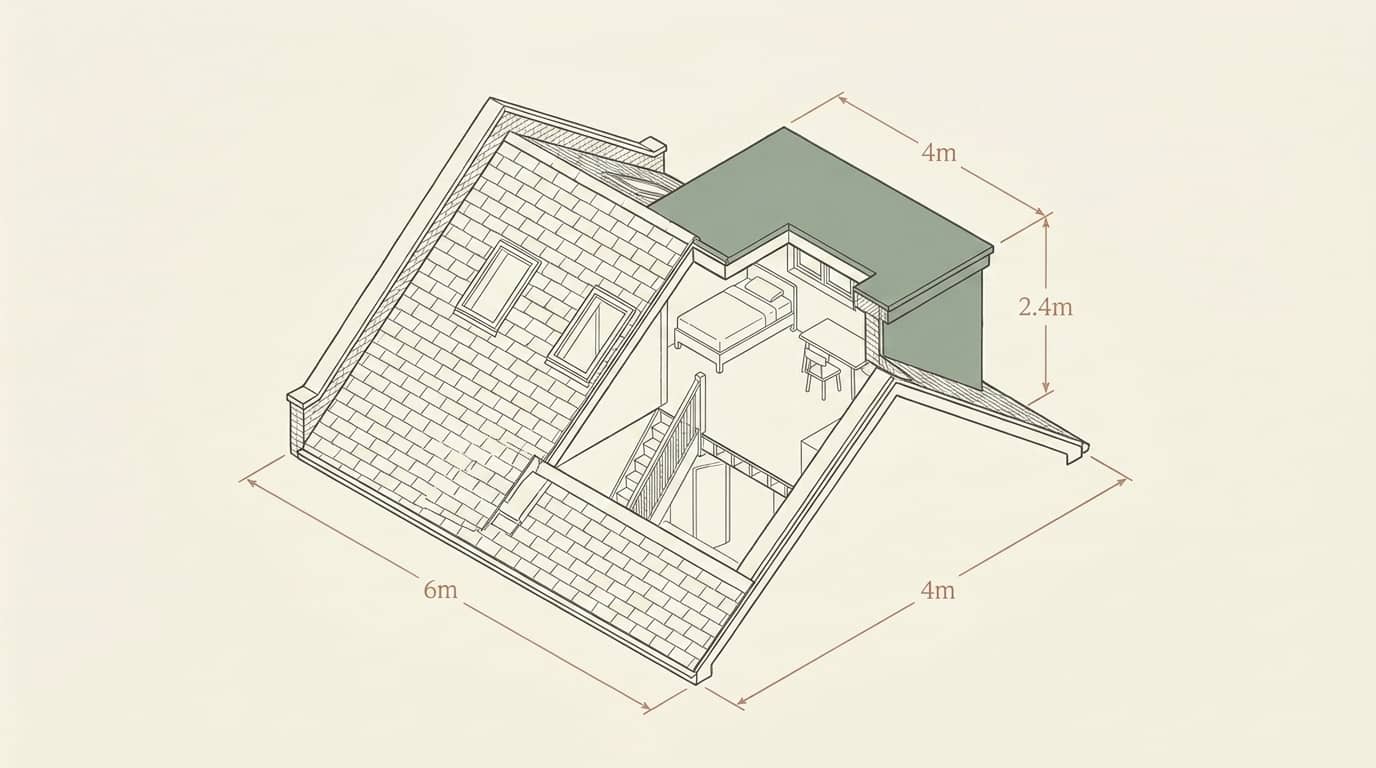
Dormer, hip-to-gable and mansard loft conversion drawings for Loggerheads homes — prepared to Newcastle-under-Lyme Borough Council's design guidance, delivered in days and revised free until your decision lands, with a free approval-odds score first.
Newcastle-under-Lyme Borough Council granted 98% of the householder planning decisions it made in its latest published year — 11 points above the 87% England-wide householder average. Loggerheads contains Mucklestone, Shropshire Union Canal, Tyrley conservation areas (Mucklestone designated 1977), so materials, fenestration and roof form are assessed against the appraisal, which is where a policy-literate drawing pack earns its keep. Its dominant Victorian (1837–1901) and postwar (1945–1970) housing stock sets the design brief on most streets.
Before permission is required, Class B allows 40m³ of added loft volume on a terrace and 50m³ on a semi or detached house, and Class A allows a 3m single-storey rear extension on a terrace or 4m on a detached house. Loggerheads carries at least one Article 4 direction, and conservation areas including Mucklestone and Shropshire Union Canal, Tyrley remove those rights outright, so we confirm your exact address before a line is drawn. A validated householder application in Loggerheads is determined against an 8-week statutory target.
Mucklestone (conservation area designated in 1977) and Shropshire Union Canal, Tyrley (conservation area designated in 1984) — these are the Loggerheads pockets our drawings cover most. Heritage designations here include Mucklestone and Shropshire Union Canal, Tyrley. Newcastle-under-Lyme Borough Council weighs each proposal against Newcastle-under-Lyme Borough Council's development plan and the design policies it applies to householder applications, where the 2,140 homes here are 17% 1965-1972, 14% 1983-1992, 13% pre-1900, which is what sets the realistic roof and rear-projection options. On roofs the borough is shallow-pitched roofs and integral garages typical of that period's building and trussed-rafter roofs typical of 1980s building, over late-1960s and early-1970s houses (17% of 2,140 homes), 1980s estate houses (14%) and Victorian and earlier houses (13%).
What is permitted in Loggerheads turns on designation first, so that is where we start: Mucklestone (conservation area designated in 1977) and Shropshire Union Canal, Tyrley (conservation area designated in 1984). Inside those boundaries permitted development is curtailed and Newcastle-under-Lyme Borough Council assesses materials, window detail and roof form against the area's own appraisal, so a scheme that would be waved through two streets away can need a full application here.
Newcastle-under-Lyme Borough Council has 13 recorded Article 4 directions, removing permitted development for rear and side extensions and other roof alterations, including rooflights — check the address before assuming PD applies in Loggerheads.
On stock, Loggerheads is late-1960s and early-1970s houses (17% of 2,140 homes), 1980s estate houses (14%) and Victorian and earlier houses (13%) — which is why shallow-pitched roofs and integral garages typical of that period's building and trussed-rafter roofs typical of 1980s building govern what a loft or rear projection can realistically be. Newcastle-under-Lyme Borough Council decided 219 householder applications in the latest published year and granted 98%, with 68% issued inside the eight-week target. We draw to that record rather than to a national average.
The full build-period split for Loggerheads runs pre-1900 13% (280 homes), 1900-1918 2% (40 homes), 1919-1929 3% (70 homes), 1930-1939 5% (110 homes), 1945-1954 5% (100 homes), 1955-1964 9% (200 homes), 1965-1972 17% (360 homes), 1973-1982 11% (230 homes), 1983-1992 14% (290 homes), 1993-1999 2% (40 homes) and 2000-2008 8% (170 homes). That distribution is why pre-1900 detailing dominates the drawings here, and it is measured from council-tax records rather than assumed from the street name.
Newcastle-under-Lyme Borough Council also decides for Audley, Keele, Madeley & Betley, Maer & Whitmore, May Bank, Talke & Butt Lane, Town and Wolstanton, so a decision in Loggerheads sits inside a wider pattern of decisions we track across the same authority — useful when an officer cites a precedent from the next area over.
The Article 4 directions recorded for this council include Audley, Basford, Betley and Brampton. Each removes a specific permitted-development right inside its own boundary, which is why the check is done on the address rather than on the town.
Published figures for Loggerheads and Newcastle-under-Lyme Borough Council. These are the numbers that decide what is realistic on your street, so we work from them rather than from national averages.
| Measure | Loggerheads |
|---|---|
| Dwellings recorded | 2,140 |
| Built pre-1900 | 280 (13%) |
| Built 1900-1918 | 40 (2%) |
| Built 1919-1929 | 70 (3%) |
| Built 1930-1939 | 110 (5%) |
| Built 1945-1954 | 100 (5%) |
| Built 1955-1964 | 200 (9%) |
| Built 1965-1972 | 360 (17%) |
| Built 1973-1982 | 230 (11%) |
| Built 1983-1992 | 290 (14%) |
| Built 1993-1999 | 40 (2%) |
| Built 2000-2008 | 170 (8%) |
| Built before 1919 | 15% |
| Built 1919–1939 | 8% |
| Built 1945–2008 | 65% |
| Conservation areas in Loggerheads | 2 (Mucklestone, Shropshire Union Canal, Tyrley) |
| Conservation areas district-wide | 22 |
| Article 4 directions recorded | 13 |
| Householder applications decided | 219 |
| Householder applications granted | 98% |
| Decided within 8 weeks | 68% |
Dwelling stock from VOA council-tax data at 31 March 2025; conservation-area and Article 4 counts from planning.data.gov.uk (MHCLG); decision figures are Newcastle-under-Lyme Borough Council's own, from MHCLG live table PS2 for the year to 31 March 2026.
Loggerheads's roofs set the brief. The borough is built largely from late-1960s and early-1970s houses (17% of 2,140 homes), 1980s estate houses (14%) and Victorian and earlier houses (13%), and its lofts sit under shallow-pitched roofs and integral garages typical of that period's building and trussed-rafter roofs typical of 1980s building — the geometry that decides whether a rear dormer, a hip-to-gable or a mansard gives you the headroom you want. Newcastle-under-Lyme Borough Council assesses loft proposals against Newcastle-under-Lyme Borough Council's development plan and the design policies it applies to householder applications, and its case officers read each roof against the pair next door and the wider street before they read the plans.
That makes drawing quality decisive. We measure ridge and eaves heights, roof pitch and the existing stair, calculate the added volume against the permitted-development limits exactly, and show the workings on the drawings so Newcastle-under-Lyme Borough Council can verify them. Loggerheads contains Mucklestone, Shropshire Union Canal, Tyrley conservation areas (Mucklestone designated 1977), so materials, fenestration and roof form are assessed against the appraisal, so we resolve it on the page rather than leave it for the case officer to raise.
Loggerheads also carries protected streets — Mucklestone and Shropshire Union Canal, Tyrley among them. Newcastle-under-Lyme Borough Council has 13 recorded Article 4 directions, removing permitted development for rear and side extensions and other roof alterations, including rooflights — check the address before assuming PD applies in Loggerheads. We check your address against those designations before a line is drawn.

Many Loggerheads loft conversions proceed without planning permission — a rear dormer within the permitted-development volume limits (40 cubic metres on a terrace, 50 on a semi or detached house) is usually lawful. You will normally need a full application to Newcastle-under-Lyme Borough Council if any of these apply:
We draw the roof line, the ridge height and the neighbour's daylight on the page — the relationships Newcastle-under-Lyme Borough Council's officers check first — and submit a validation-complete pack, whether that is a lawful development certificate or a full householder application.
Below is Newcastle-under-Lyme Borough Council's real householder decision record, pulled from official planning statistics and updated as new data lands. Newcastle-under-Lyme Borough Council granted 98% of its householder applications in the year to 31 March 2026, and Mucklestone shapes what is approved here. Professionally prepared loft drawings anticipate those pressure points before submission, which is why complete, policy-literate packs are decided faster and refused less often than DIY applications.
Source: MHCLG planning application statistics (householder decisions, England, 1 April 2025 - 31 March 2026). Compare every borough on our London approval-rate league table.
Tell us about your project and get a fixed, no-obligation quote back within one working day. If you don't need planning permission at all, we'll tell you that too — for free.
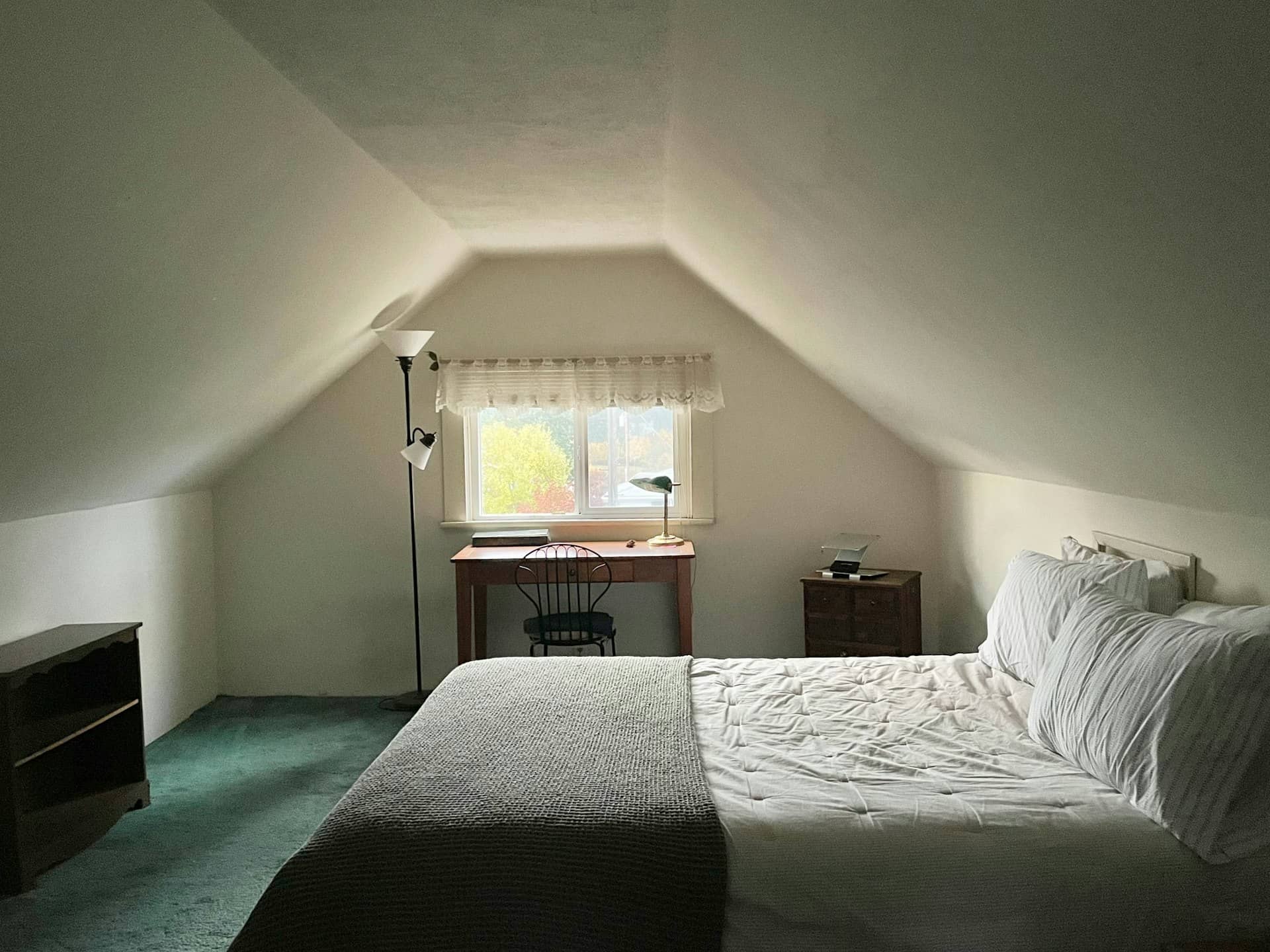
Across Mucklestone and Shropshire Union Canal, Tyrley, the recurring loft is the rear dormer — a box across the back roof slope that turns a cramped attic into a full-height double bedroom and en-suite. On shallow-pitched roofs and integral garages typical of that period's building, that is usually the most efficient use of the roof; where the stock is trussed-rafter roofs typical of 1980s building, a hip-to-gable followed by a rear dormer unlocks far more space, though it needs a full application.
The 2,140 homes here are 17% 1965-1972, 14% 1983-1992, 13% pre-1900, which is what sets the realistic roof and rear-projection options. We draw the dormer inside the volume allowance, keep the flat-roof build-up below the ridge, and set the face back from the eaves as the rules require — so the pack answers Newcastle-under-Lyme Borough Council's questions before they are asked. Where permitted-development rights are exhausted or removed, we prepare a householder application composed to the borough's roof-alteration guidance instead.

We draw loft conversions on every street in the borough. A few of the neighbourhoods where Loggerheads roofs come up most often:
Loft conversion drawings for Mucklestone's conservation area designated in 1977 — measured, volume-checked and drawn to Newcastle-under-Lyme Borough Council's guidance.
Loft conversion drawings for Shropshire Union Canal, Tyrley's conservation area designated in 1984 — measured, volume-checked and drawn to Newcastle-under-Lyme Borough Council's guidance.
The right loft in Loggerheads depends on your roof. This is how the main types compare on planning route and the space they add.
| Loft type | Permitted development? | Space & headroom | What Newcastle-under-Lyme Borough Council checks |
|---|---|---|---|
| Rear dormer | Usually yes, within volume limits | Full-height double room at the back | Volume, set-back from eaves, ridge height |
| Hip-to-gable | No — full application | Extends the whole side of the roof | Roof bulk and the symmetry of the pair |
| Mansard | No — full application | Maximum floor area across the roof | Street character, especially in conservation areas |
| Rooflights only | Usually yes (Class C) | Light and headroom, no extra footprint | Whether rooflights sit within the existing slope |
Route depends on your street — conservation areas such as Mucklestone and Shropshire Union Canal, Tyrley and Article 4 directions can remove permitted-development rights.
A fixed process built around how Newcastle-under-Lyme Borough Council validates and decides householder loft applications — most drawings are submission-ready within seven days of survey.
Tell us your Loggerheads postcode and roof type. We confirm your conservation and Article 4 status, how much permitted-development volume you have left, and score your odds against live Newcastle-under-Lyme Borough Council decisions.
We measure ridge and eaves heights, roof pitch, joist levels and the existing stair — the numbers the volume calculation and head heights depend on.
Chartered designers develop the dormer, hip-to-gable or mansard to your brief, drawn inside the Class B limits or to Newcastle-under-Lyme Borough Council's roof-alteration guidance.
We submit the certificate or application, manage validation and case-officer queries, and revise the drawings free until Newcastle-under-Lyme Borough Council issues its decision.
Often not. A rear dormer within 40 cubic metres on a terrace, or 50 on a semi-detached or detached house, set back from the eaves and no higher than the ridge, is usually permitted development. In Loggerheads the main exceptions are hip-to-gable conversions, dormers visible from the highway, and homes in conservation areas such as Mucklestone and Shropshire Union Canal, Tyrley or on streets with an Article 4 direction. Newcastle-under-Lyme Borough Council is the decision-maker.
Generally no. In conservation areas including Mucklestone and Shropshire Union Canal, Tyrley, Class B permitted-development rights for lofts are removed, so a rear dormer that would be lawful elsewhere needs a full application to Newcastle-under-Lyme Borough Council. Newcastle-under-Lyme Borough Council has 13 recorded Article 4 directions, removing permitted development for rear and side extensions and other roof alterations, including rooflights — check the address before assuming PD applies in Loggerheads. We check your exact address before drawing.
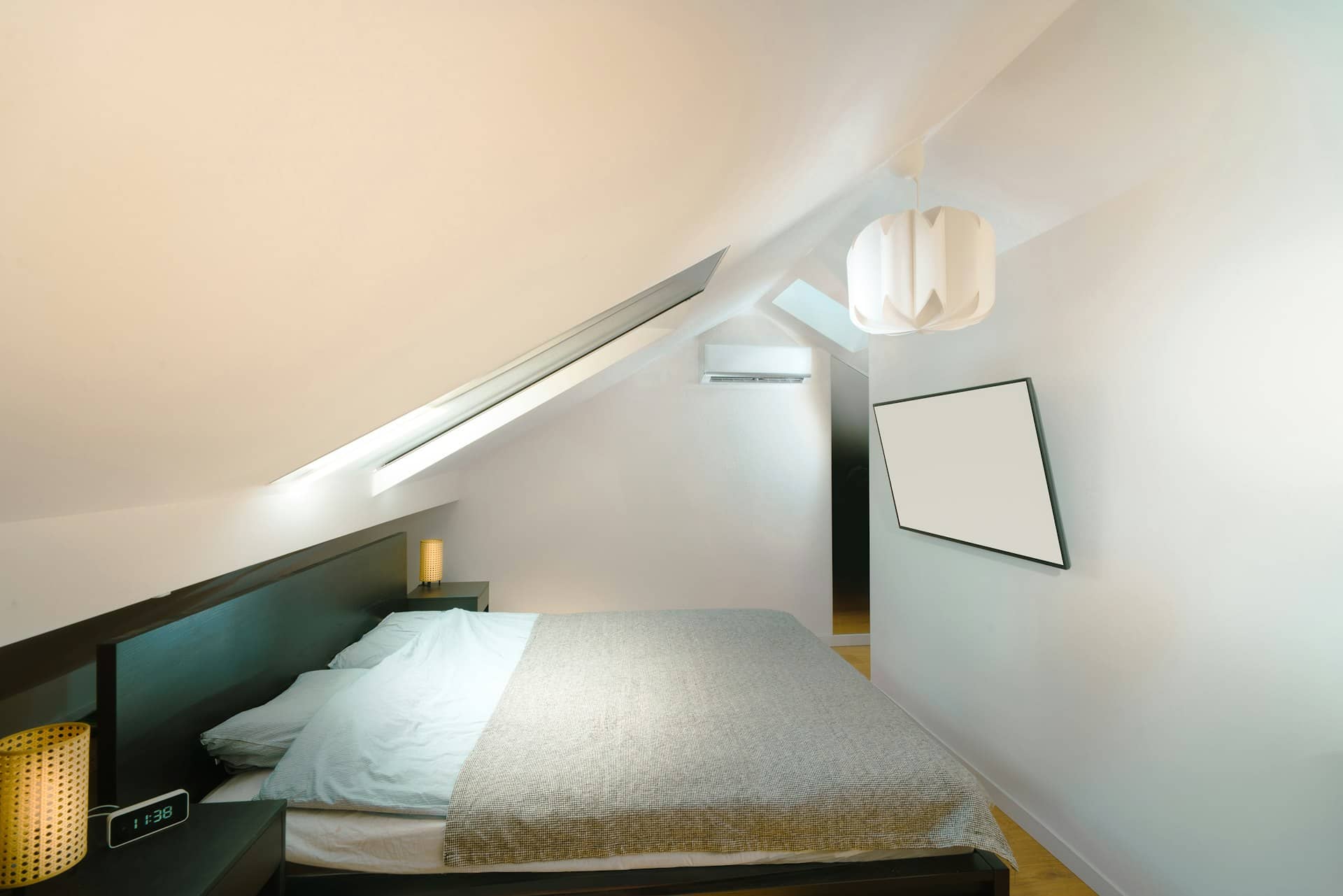
On shallow-pitched roofs and integral garages typical of that period's building, common across Loggerheads, a rear dormer is usually the most efficient conversion and often permitted development. Where the roof is trussed-rafter roofs typical of 1980s building, a hip-to-gable followed by a rear dormer gains far more usable space but needs planning permission. Our survey confirms which your roof supports before we draw. Newcastle-under-Lyme Borough Council is the decision-maker.
A householder planning application in Loggerheads runs to a statutory eight-week target, and a lawful development certificate to eight weeks as well, though validation can add time if the pack is incomplete. We submit validation-complete drawings and manage case-officer queries to keep the decision on track. Newcastle-under-Lyme Borough Council is the decision-maker.
If your dormer is permitted development, a lawful development certificate from Newcastle-under-Lyme Borough Council is council-stamped proof of that — worth having, because every buyer's solicitor will ask for it when you sell. We prepare and submit the certificate application with the same drawing pack. This applies to your Loggerheads address specifically.
Every roof is different, so we quote each Loggerheads project individually — a fixed, no-obligation price back within one working day. The quote covers the full drawing pack with free revisions until Newcastle-under-Lyme Borough Council approves, and we tell you upfront whether your loft qualifies as permitted development. Call 020 7864 7245 to start.
Answer five quick questions and get a free planning score for your exact address — instantly. Then, if you want the full picture, unlock the detailed analysis: your council's live approval rates, local precedents, constraints on your street and a step-by-step route to permission.
Same fixed quotes, same fast drawings — wherever your project is.