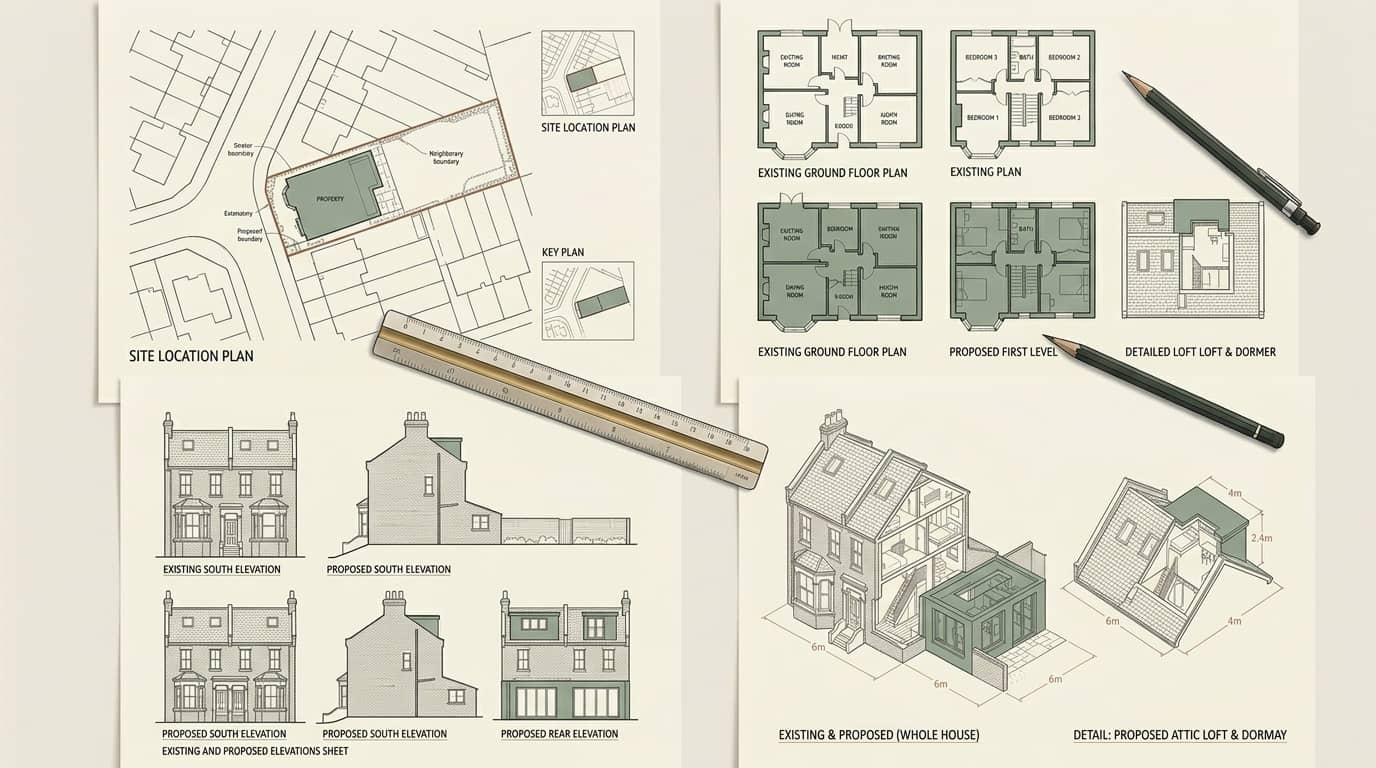
The party-wall route handled end to end for your Wandsworth project — the right notices served on the neighbours, a schedule of condition to protect both sides, and a party-wall award agreed before work starts, so an extension, loft or basement proceeds lawfully and without dispute, with a free initial assessment of whether the Act even applies.
Wandsworth Council granted 88% of the householder planning decisions it made in its latest published year — 1 point above the 87% England-wide householder average. Side returns, mansards and dormers are judged in centimetres against the party wall and shared roofline, which is where a policy-literate drawing pack earns its keep. Its dominant Victorian (1837–1901) and Edwardian (1901–1910) housing stock sets the design brief on most streets.
Before permission is required, Class B allows 40m³ of added loft volume on a terrace and 50m³ on a semi or detached house, and Class A allows a 3m single-storey rear extension on a terrace or 4m on a detached house. Wandsworth carries at least one Article 4 direction, and conservation areas including Wandsworth Common, Nightingale Triangle and Tonsleys remove those rights outright, so we confirm your exact address before a line is drawn. A validated householder application in Wandsworth is determined against an 8-week statutory target.
Battersea (Victorian terraces and mansion flats near the park), Balham (Edwardian terraces around the Nightingale Triangle), Tooting (long Victorian terraces off the high road), Putney (Edwardian villas and riverside streets), Earlsfield (compact Victorian terraces between the commons) and Southfields (the Magdalen Park grid of Edwardian houses) — these are the Wandsworth pockets our drawings cover most. Heritage designations here include Wandsworth Common, Nightingale Triangle, Tonsleys, Magdalen Park and Battersea Park. Wandsworth Council weighs each proposal against Wandsworth Local Plan and the borough's Housing and Basements SPDs, where the borough applies detailed basement-development policies on top of the usual tests. Much of Battersea and Balham is converted flats and maisonettes, which carry no householder permitted-development rights.. On roofs the borough is butterfly / valley roofs on the terraces and pitched roofs on the villas, over Victorian terraces, Edwardian mansion flats and Putney and Wandsworth villas.
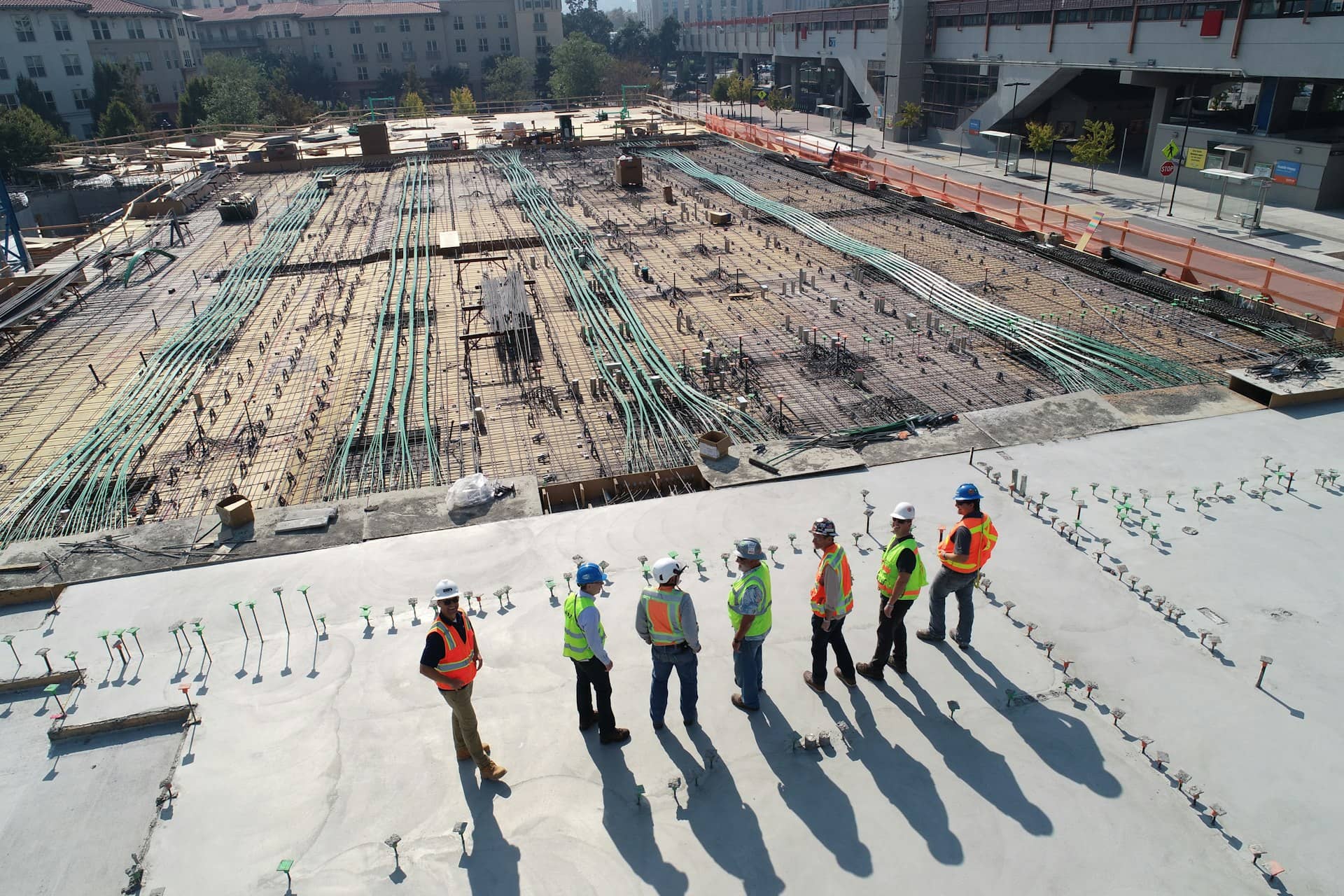
Wandsworth is built wall-to-wall. Its Victorian terraces, Edwardian mansion flats and Putney and Wandsworth villas share party walls the length of a street, so the loft conversions, side and rear extensions and basements that make these houses bigger nearly all touch a structure the neighbour half-owns. The Party Wall etc. Act exists precisely for this: it gives the building owner a lawful way to do the work and the adjoining owner a set of protections, and it runs entirely alongside — never instead of — the planning and building-control consents.
Three kinds of work bring the Act into play. Cutting into, raising or rebuilding a shared wall — a loft steel bearing on the party wall, a chimney removed — falls under the works notice. Building a new wall up to or astride the boundary engages the line-of-junction notice. And excavating within three metres of a neighbour's building and below its foundation level — routine for a basement or a deep extension footing — triggers the section 6 notice. On Battersea's Victorian terraces and mansion flats near the park and the streets around Balham, the same tight geometry is what makes party-wall matters so common. Side returns, mansards and dormers are judged in centimetres against the party wall and shared roofline.
On the older terraces of Wandsworth — in and around Wandsworth Common, Nightingale Triangle, Tonsleys, Magdalen Park and Battersea Park — the shared walls are frequently original and shared by more than one neighbour, so a single project can require notices on several adjoining owners at once. Several Wandsworth conservation areas carry Article 4 directions, and the borough's dense conservation coverage means many terraced streets need a full application for works that would be PD elsewhere. We identify every adjoining owner and the correct notice for each before anything is served.

The Act is separate from planning permission — it applies to the building work itself, not the council decision. On streets like Battersea, Balham and Tooting you must serve a party-wall notice on your Wandsworth neighbour where any of these apply:
We assess whether the Act applies, serve the correct notices on every adjoining owner from Battersea to Tooting, prepare a photographic schedule of condition that protects both sides, and — where the neighbour dissents — act as party-wall surveyor to agree an award before work starts, so your Wandsworth build proceeds lawfully rather than stalling on a neighbour dispute.
Below is Wandsworth Council's real householder decision record, drawn from official planning statistics and refreshed as new data lands. Wandsworth grants a healthy share of householder applications, but its uniform Victorian terraces mean side returns and roof alterations are assessed in centimetres against the neighbours. Party-wall matters run alongside these permissions rather than through them — but the volume of extensions and lofts approved here is the volume of projects that will need notices served on a neighbour.
Source: MHCLG planning application statistics (householder decisions, rolling year). Compare every borough on our London approval-rate league table.
Tell us about your project and get a fixed, no-obligation quote back within one working day. If you don't need planning permission at all, we'll tell you that too — for free.
The process has a clear shape. You serve notice on the adjoining owner, giving the required period — a month for line-of-junction and excavation notices, two months for works to the wall itself. The neighbour then consents, dissents, or stays silent (which counts as dissent). If they consent, a schedule of condition still protects both parties. If they dissent, a surveyor is appointed — one agreed surveyor for both, or one each — to settle a party-wall award: the document that records the condition of the neighbour's property, sets out how and when the work proceeds, and provides the route to resolve any damage. Across Battersea, Balham and Tooting this is the sequence that keeps a build moving.
The borough applies detailed basement-development policies on top of the usual tests. Getting the notice right first time matters, because an invalid notice can be challenged and set your Wandsworth start date back by months, and starting work without one exposes you to an injunction. We serve valid notices, record the neighbour's property honestly in the schedule of condition, and where surveyors are appointed we act firmly but proportionately — the award should let the work happen, not stall it.

We handle notices, schedules and awards on the tight terraced and semi-detached streets across the borough. A few of the Wandsworth neighbourhoods where party-wall matters come up most often:
Party wall notices and awards for Battersea's Victorian terraces and mansion flats near the park — every adjoining owner identified and a schedule of condition prepared before work starts.
Party wall notices and awards for Balham's Edwardian terraces around the Nightingale Triangle — every adjoining owner identified and a schedule of condition prepared before work starts.
Party wall notices and awards for Tooting's long Victorian terraces off the high road — every adjoining owner identified and a schedule of condition prepared before work starts.
Party wall notices and awards for Putney's Edwardian villas and riverside streets — every adjoining owner identified and a schedule of condition prepared before work starts.
Party wall notices and awards for Earlsfield's compact Victorian terraces between the commons — every adjoining owner identified and a schedule of condition prepared before work starts.
Party wall notices and awards for Southfields's the Magdalen Park grid of Edwardian houses — every adjoining owner identified and a schedule of condition prepared before work starts.
The Act sets out three notice types by the kind of work. This is which applies, the notice period, and the typical project behind it.
| Notice | Triggered by | Notice period | Typical project |
|---|---|---|---|
| Section 2 works | Cutting into, raising or rebuilding a shared wall | Two months | Loft steel, extension, chimney removal |
| Line of junction | A new wall up to or astride the boundary | One month | Side or rear extension flank wall |
| Section 6 excavation | Digging within 3m and below the neighbour's foundations | One month | Basement, deep extension footing |
| Schedule of condition | Recording the neighbour's property beforehand | Before work | Every party-wall project |
On an end-terrace or corner property in Wandsworth — common around Wandsworth Common and Nightingale Triangle — a single project can require several of these notices served on different adjoining owners at once.
A fixed sequence that keeps the neighbour onside and the build lawful — the assessment is free, so you know whether the Act even applies before committing.
Tell us the Wandsworth project and where it sits relative to the neighbours. We confirm whether the Party Wall Act applies, which notices are needed and on how many adjoining owners.
We prepare and serve the correct valid notices on every adjoining owner across Battersea and Balham, with the required notice period, so the clock starts cleanly and cannot be challenged as defective.
Before work starts we prepare a dated, photographic schedule of condition of the neighbour's property in Balham or wherever the Wandsworth project sits, so any later damage claim can be judged against a clear record that protects both sides.
Where a neighbour dissents we act as party-wall surveyor to agree an award setting out how the work proceeds, then remain available through the Wandsworth build to resolve any issue that arises.
You do wherever your work touches a shared wall or excavates near a neighbour — which covers most loft conversions, side and rear extensions and all basements on Wandsworth's victorian terraces around Battersea and Tooting. It is separate from planning permission: you can have full permission from Wandsworth Council and still be legally required to serve a party-wall notice. Our free assessment confirms whether the Act applies to your specific project before anything is served.
You expose yourself to real risk. A neighbour can seek an injunction to stop the work, and without a schedule of condition you have no agreed record to defend a damage claim, so you may end up paying for pre-existing cracks in their victorian terraces. Serving valid notices first protects you as much as the neighbour. If you have already started a Wandsworth project, we advise on the quickest lawful way to put it right. Wandsworth Council is the decision-maker.
Build the notice period into your programme: a line-of-junction or excavation notice needs one month, and a notice for works to the wall itself needs two months, before work can start. If the neighbour consents quickly the process ends there; if they dissent, agreeing an award typically adds a few more weeks. Starting the party-wall route early in your Wandsworth project — especially on the dense streets around Balham — keeps it off the critical path, and we flag the timing at the assessment. Wandsworth Council is the decision-maker.
As a rule the building owner — the person doing the work — pays the reasonable surveyors' costs, because they are the one benefiting from the project. That usually includes the adjoining owner's surveyor's fee where the neighbour dissents and appoints their own — common on the shared party walls around Tooting. The award itself sets out who bears what. We are clear about the likely cost structure of your Wandsworth matter at the outset, with no surprises later. Wandsworth Council is the decision-maker.
A schedule of condition is a dated, photographic record of the adjoining property's state before your work begins — walls, ceilings, existing cracks and finishes — particularly valuable on the older victorian terraces common in Tooting. It protects both sides: if the neighbour later claims your Wandsworth build caused damage, the schedule shows what was already there, and it reassures the neighbour that genuine new damage will be put right. We prepare it thoroughly before any work starts, whether or not the neighbour has dissented. Wandsworth Council is the decision-maker.
We price each Wandsworth matter individually, because the number of adjoining owners, whether they consent or dissent and the complexity of the work all vary, and give a clear indication after the free assessment. A simple consented notice with a schedule of condition is modest; a dissented award with surveyors on both sides costs more, and the building owner usually bears the reasonable fees. Call 020 7864 7245 to start. Wandsworth Council is the decision-maker.
Answer five quick questions and get a free planning score for your exact address — instantly. Then, if you want the full picture, unlock the detailed analysis: your council's live approval rates, local precedents, constraints on your street and a step-by-step route to permission.
Same fixed quotes, same fast drawings — wherever your project is.